

Groupshow with Claudia Schiffer
Exhibition, curated by Ariane Mueller
WAF Gallery, Vienna, 2023
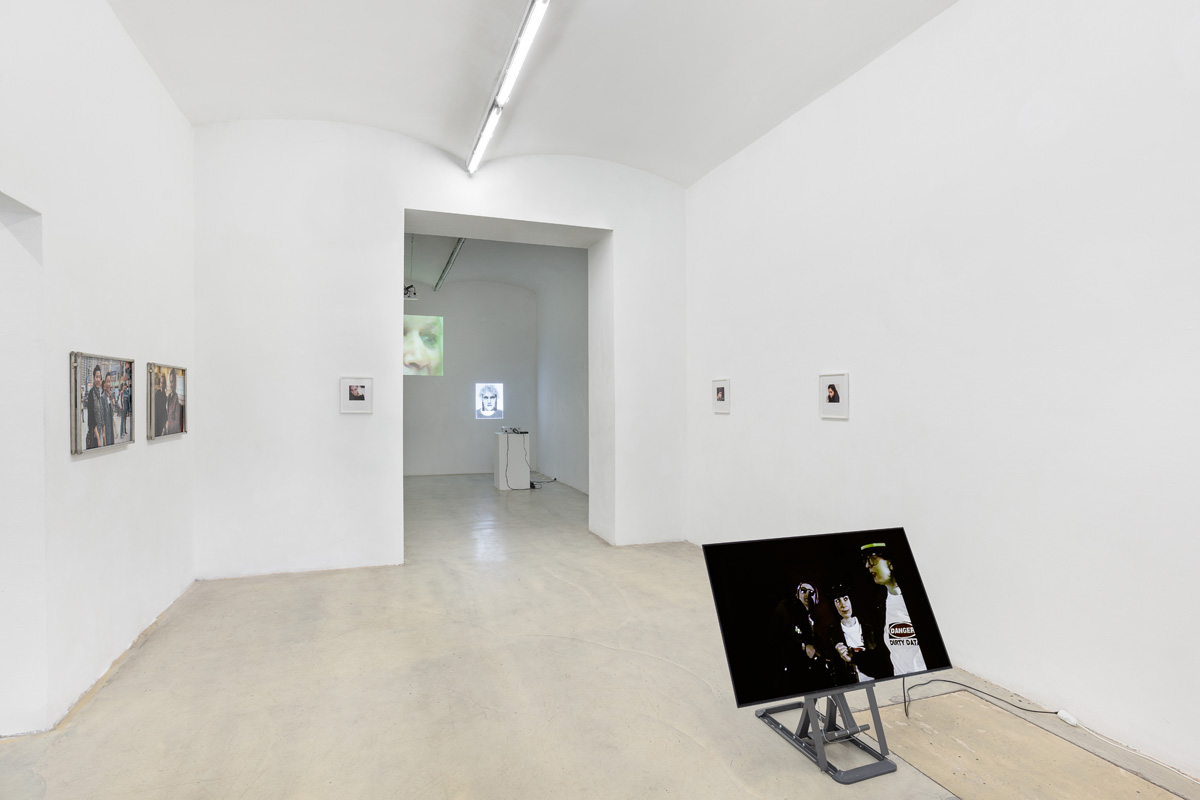
Thematic group exhibition on mimesis and other mild disOrientations in space
with works by Martin Ebner, Matthias Groebel, Sebastian Luetgert, Julia Scher, Valerie Stahl Stromberg, Josef Strau, Miriam Yammad
15.07.- 30.08.2023
www.wafgalerie.com
This exhibition revolves around recognizing oneself in the gaze of another. The exhibition ceases at the point when one’s own presence, similar to the end of a romantic relationship, fades from the gaze of the other. It is this subtle shift in regard, whether it offers containment or not, that encompasses the catastrophe of rupture in its entirety.
The advancement of the technical representability of human beings has witnessed a similar unfolding. The simulation of the human likeness confronts us with a gaze that itself has never beheld another human. The counterpart of this gaze, from which we have entirely vanished and which cannot recognize but only ever allow for us in its calculations, casts us into a similar chasm of solitude when we are confronted by it.
Opposing this is the notion of resemblance within the exhibition, and the search for that which resembles in the other. Here too, we have set the machines to follow in our footsteps, which attempt by way of measuring the parameters of a face to extract conformity from similarity. And generally, for no good. Yet in likeness to others lies our refuge, in our recognition and anticipation of others, in the affectionate gaze, our privilege.
The title of the exhibition expands on the creation of a work by German photographer Thomas Ruff—a photograph produced in 1991 as an edition for the art magazine Texte zur Kunst. It was part of a series of portraits of artists from the Cologne and Düsseldorf art scenes, in which all of their eyes were replaced with other, anonymous blue eyes. In the case of the photograph that Ruff took of the artist Josef Strau for the Texte zur Kunst edition, it is said that Ruff used the eyes of the iconic German model Claudia Schiffer. In this photograph, which seems to depict a human figure with a certain detachment, it is precisely the eyes that now reflect a completely different person / a different gender / a different horizon of experience / a different sense of self. Linguistically and visually, the blue eyes are associated with the image of the “German person.” This is a construct that Thomas Ruff certainly employs intentionally here, having been accused of precisely this in his earlier portraits of his fellow students. The task of the portrait—since the dawn of art history—to capture the subject’s individuality is, in any case, subverted by the divergent information conveyed by the eyes, on which the gaze focuses upon closer inspection. There is no one here.
Photos: kunst-dokumentation.com
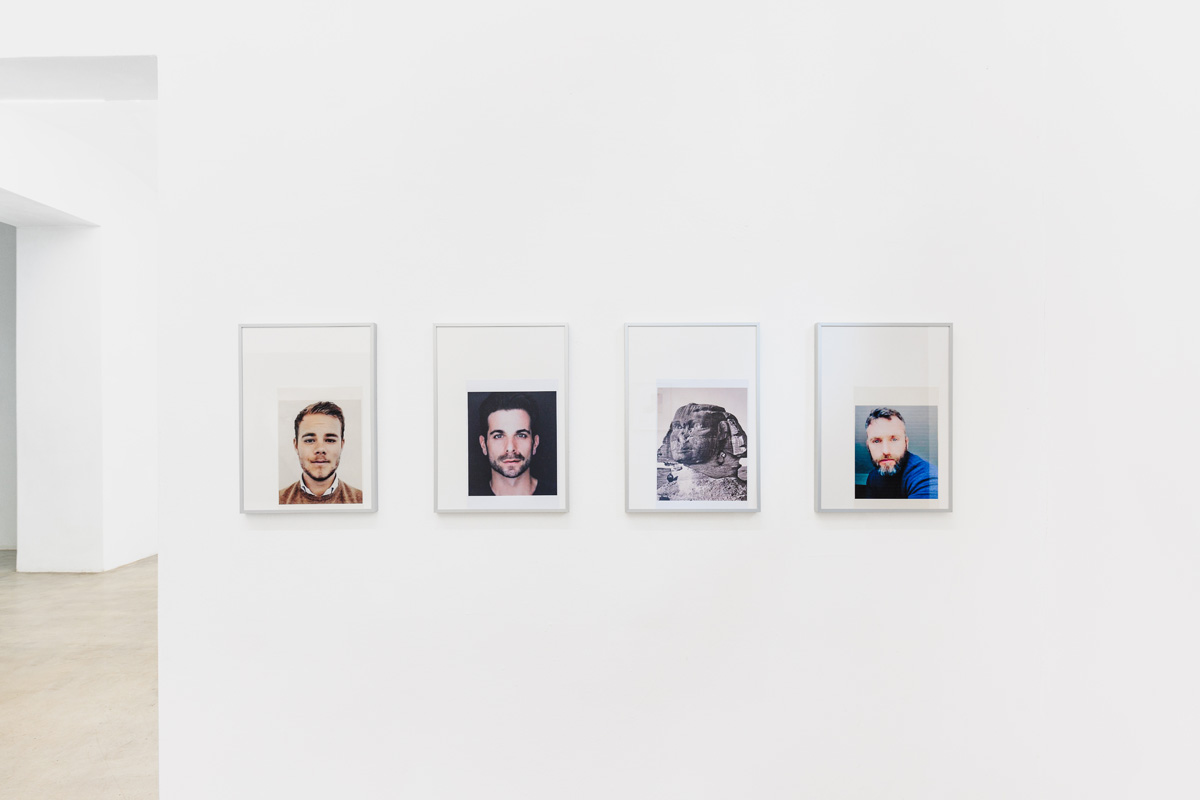
Miriam Yammad, Self-portrait
2008-2023
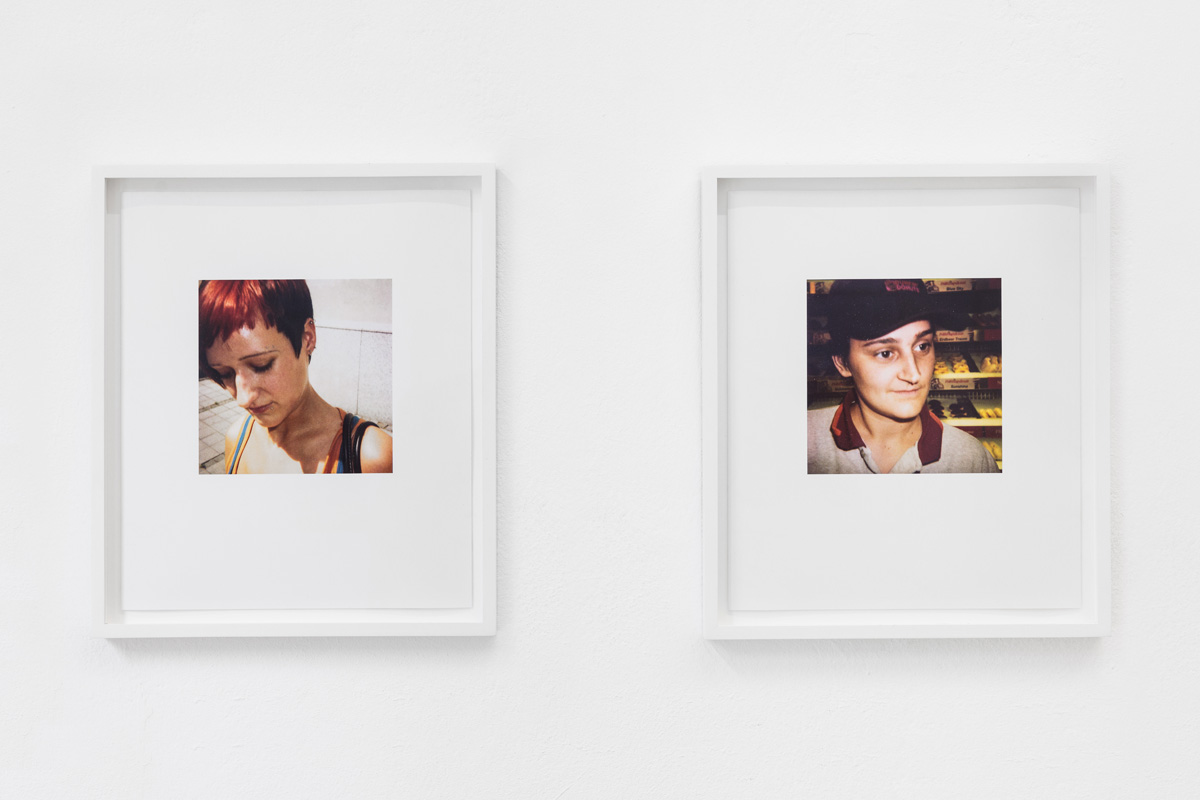
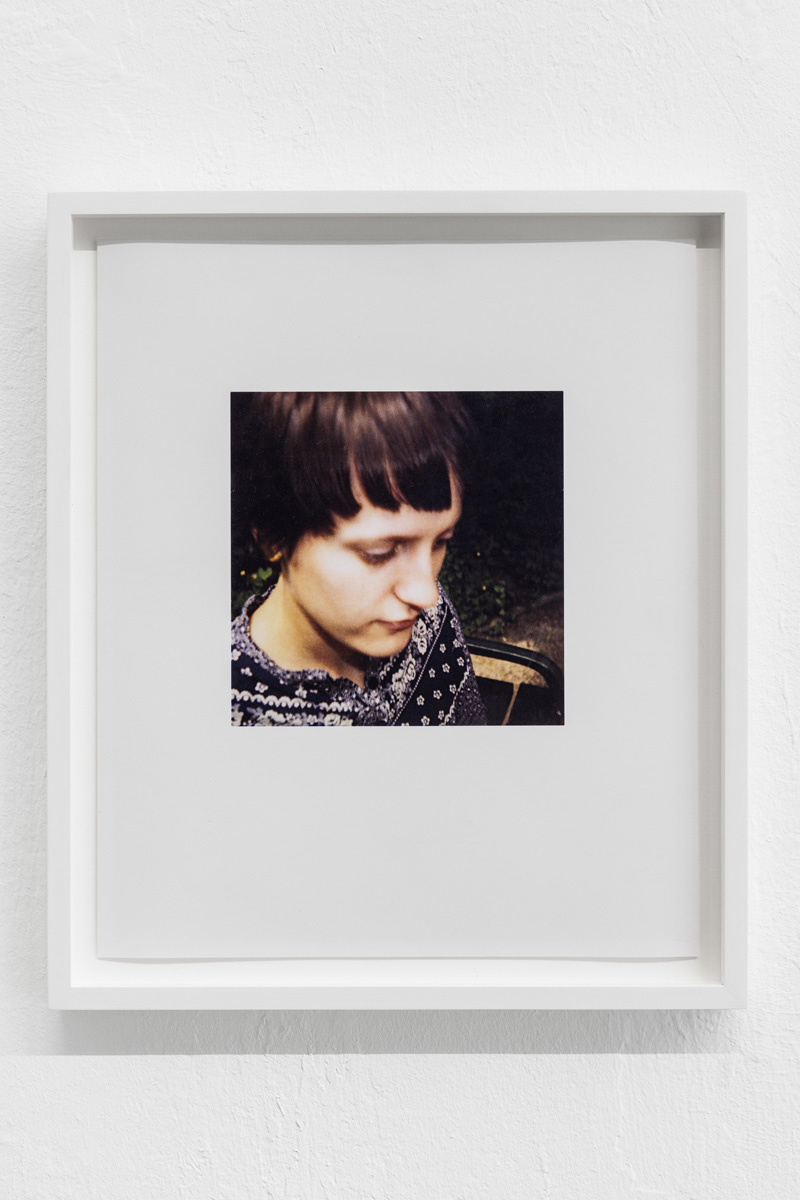
On Mimesis and Other Mild Disorientations in Space is the title of artist Miriam Yammad’s PhD dissertation and has been borrowed here for the exhibition. Her work in the exhibition space consists of 7 photographic portraits from a series of 11 images to date, created between 2008 and 2023. These are photographs of people whom the artist believes resemble her. For the artist, they represent the sudden flash of similarity amid the multitude of different faces that surround us every day.
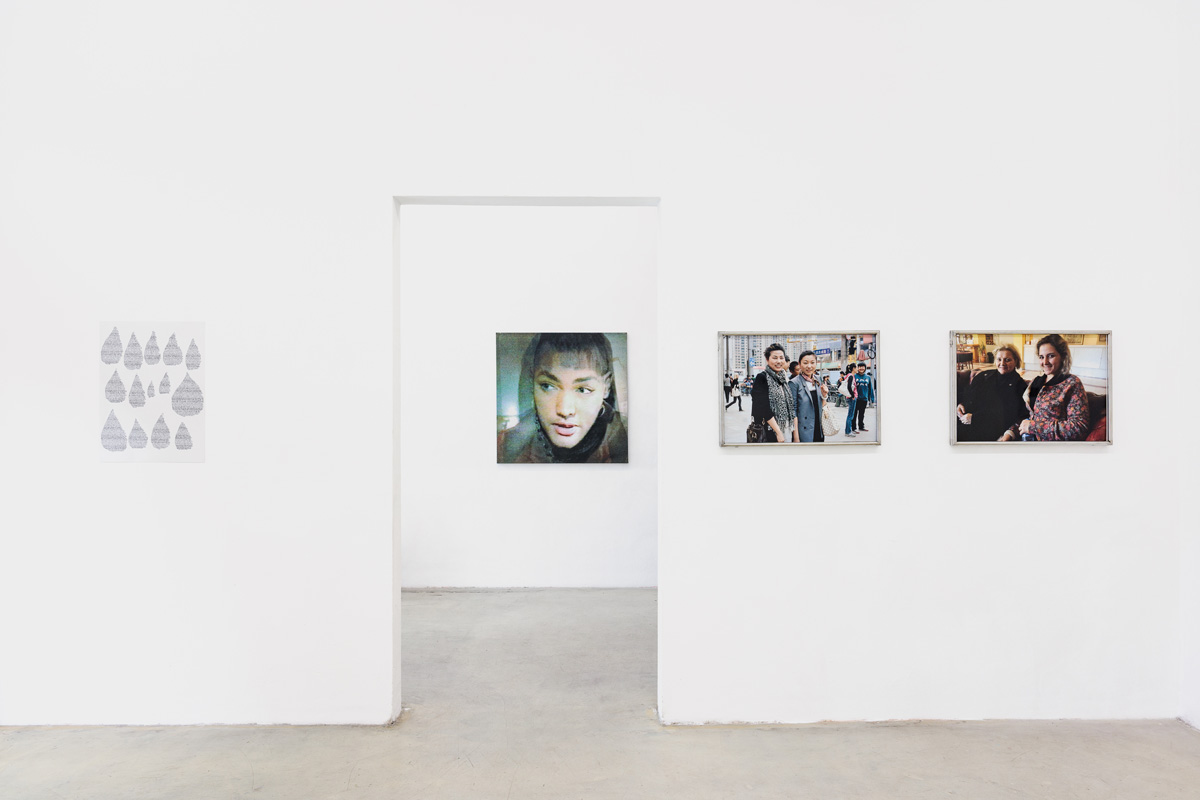
Josef Strau, Matthias Groebel, Valerie Stahl Stromberg
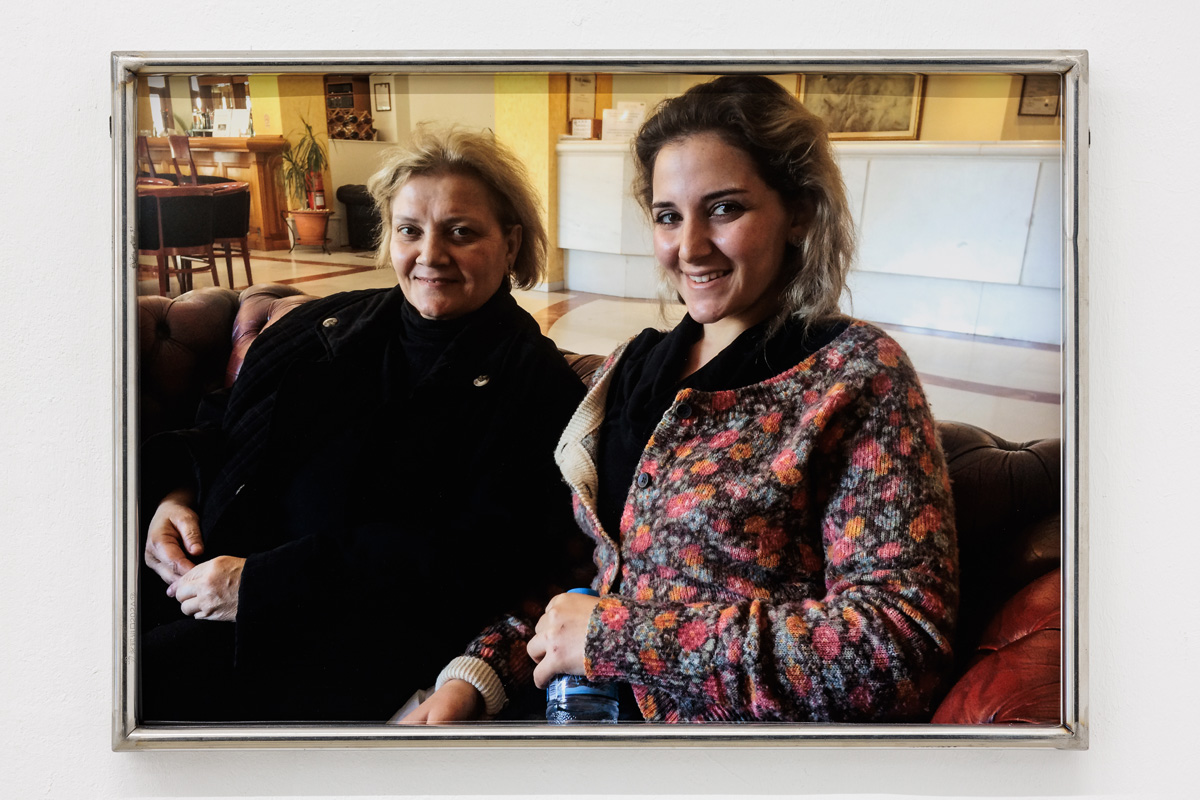
Valerie Stahl Stromberg, Non-Algo series 103
(Mother & Daughter, Kos)
2010/2023
Valerie Stahl Stromberg has photographed mother-daughter pairs in various contexts. The exhibition features two photographs: one taken in Shanghai in 2010, the other in Kos in 2015. Almost instinctively, one examines the two distinct individuals for their similarities, just as one has likely done time and again with one’s own parents. The photograph from Kos derives its emotional intensity in part from the fact that the mother and daughter depicted were rescued from a shipwreck off the Greek coast.
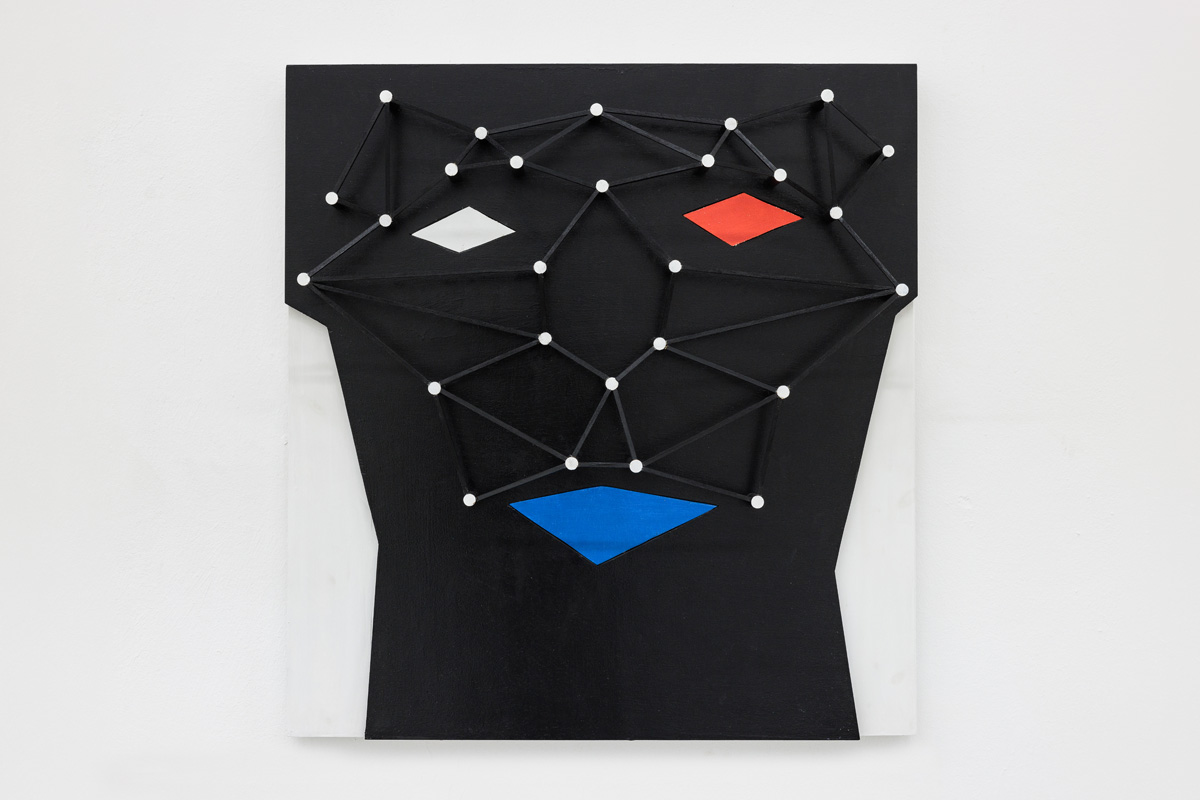
Martin Ebner, Potential Passenger
2006
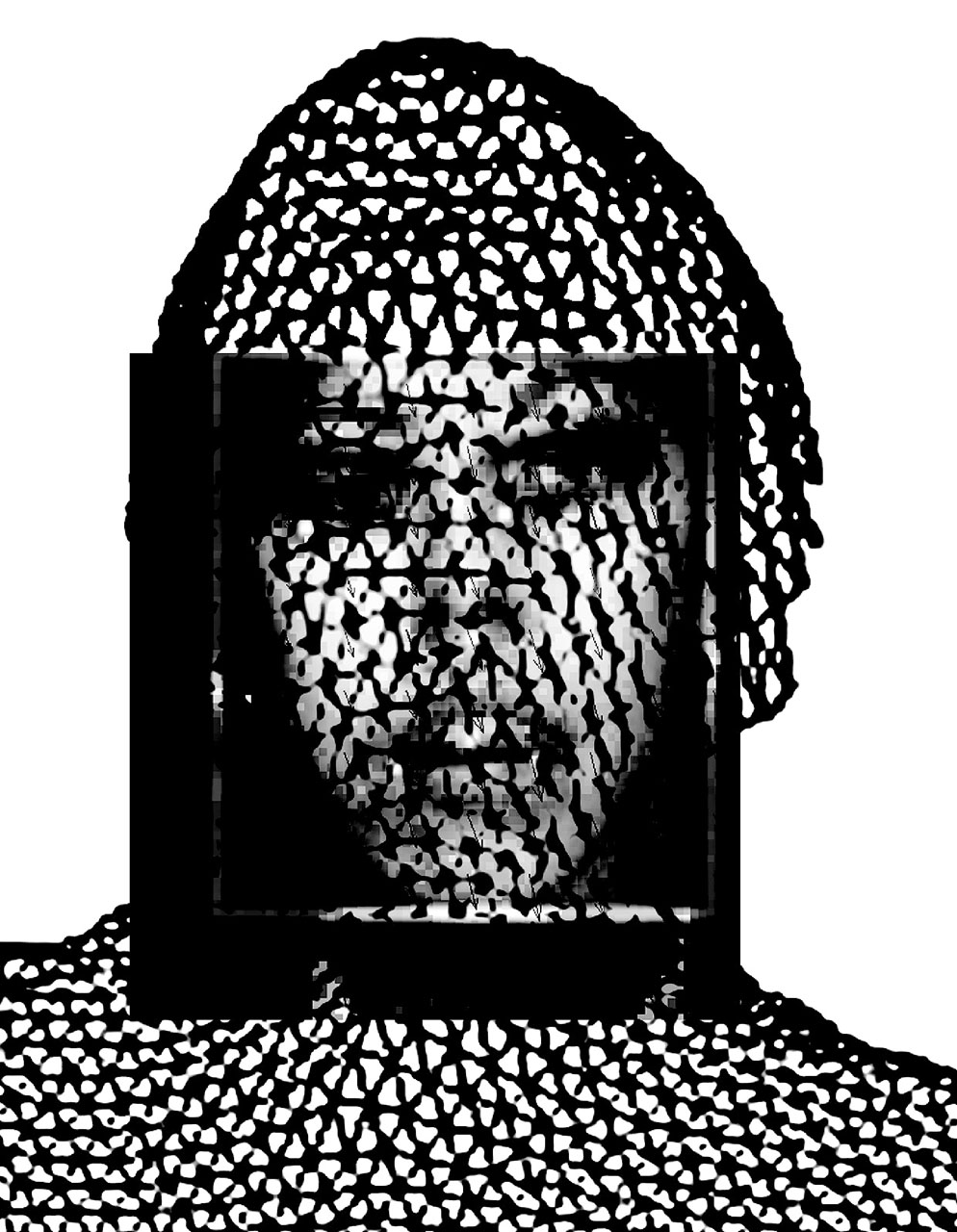
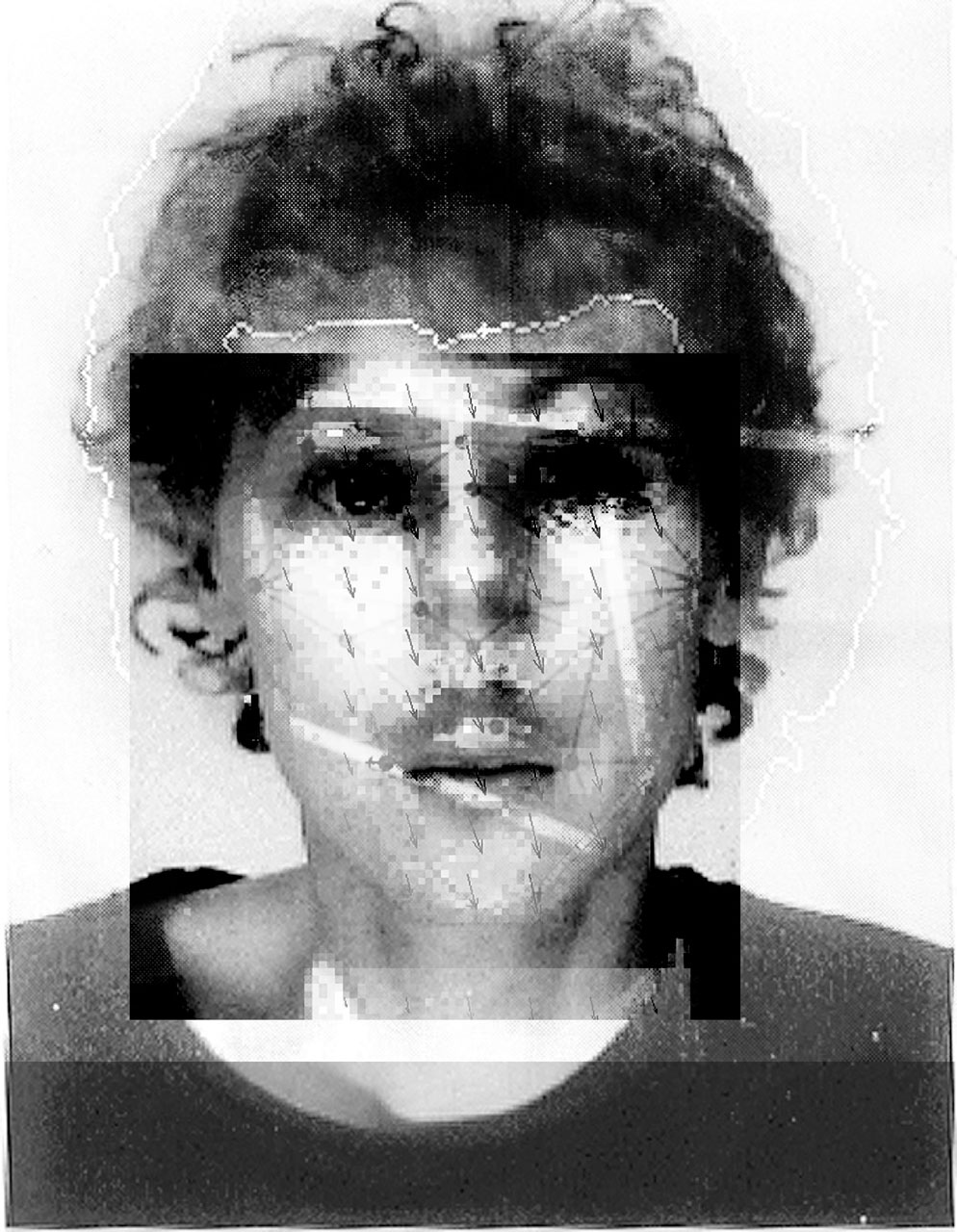
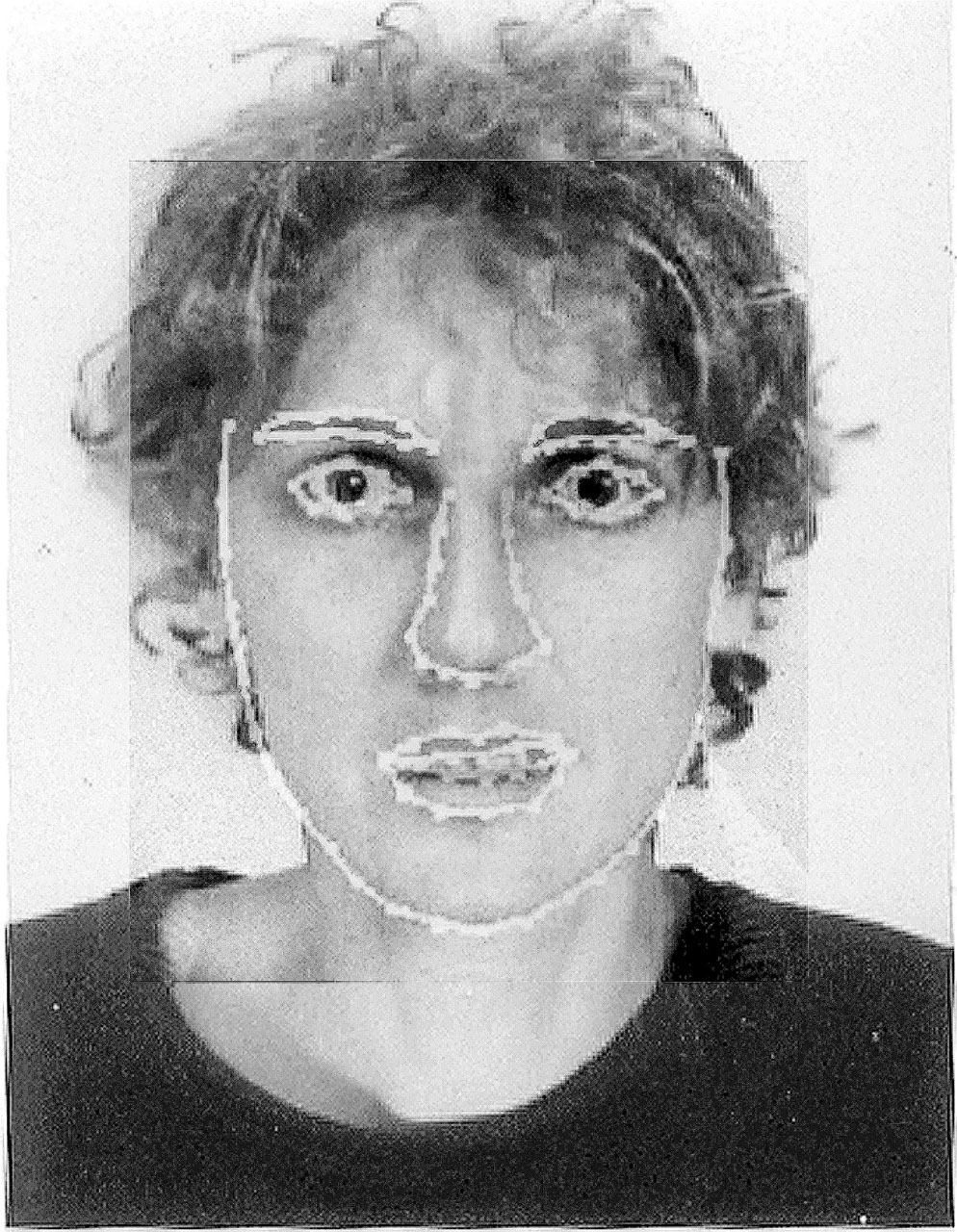
The digital portrait series designed by Martin Ebner around 2005 and the corresponding wooden object are based on the increasing automation of widespread surveillance and data-driven analysis of public space. Individual “facial signatures”—which remain virtually unchanged over the course of a lifetime and consist of datasets of just a few kilobytes—ensure the unambiguous identification of the subject. Due to the minimal changes from image to image, the series transforms the self-portrait into entirely different people. At the same time, an emotional connection develops to the underlying image of the self—an affinity for a vulnerable individual, similar to that felt toward someone who has been wrongfully imprisoned.
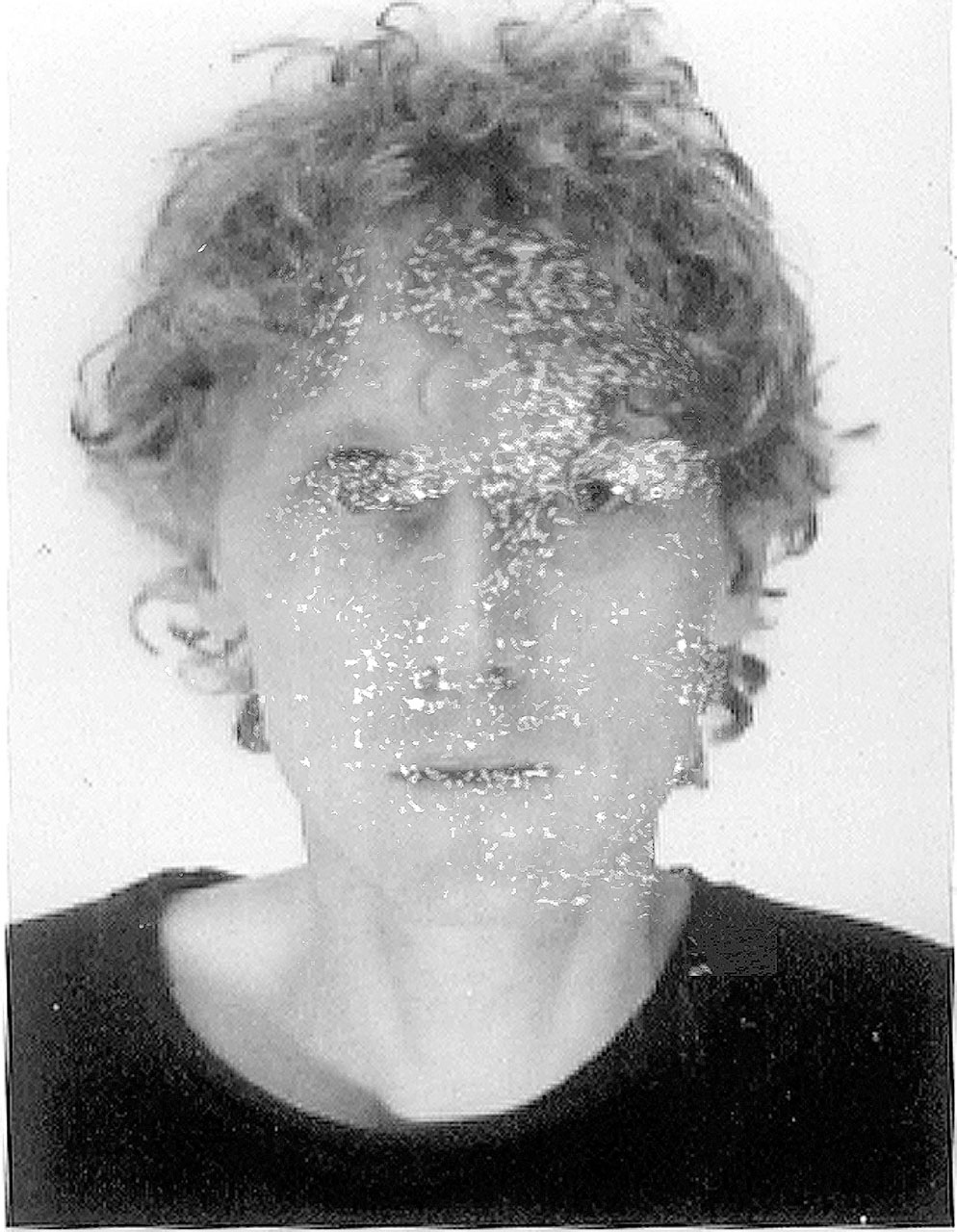
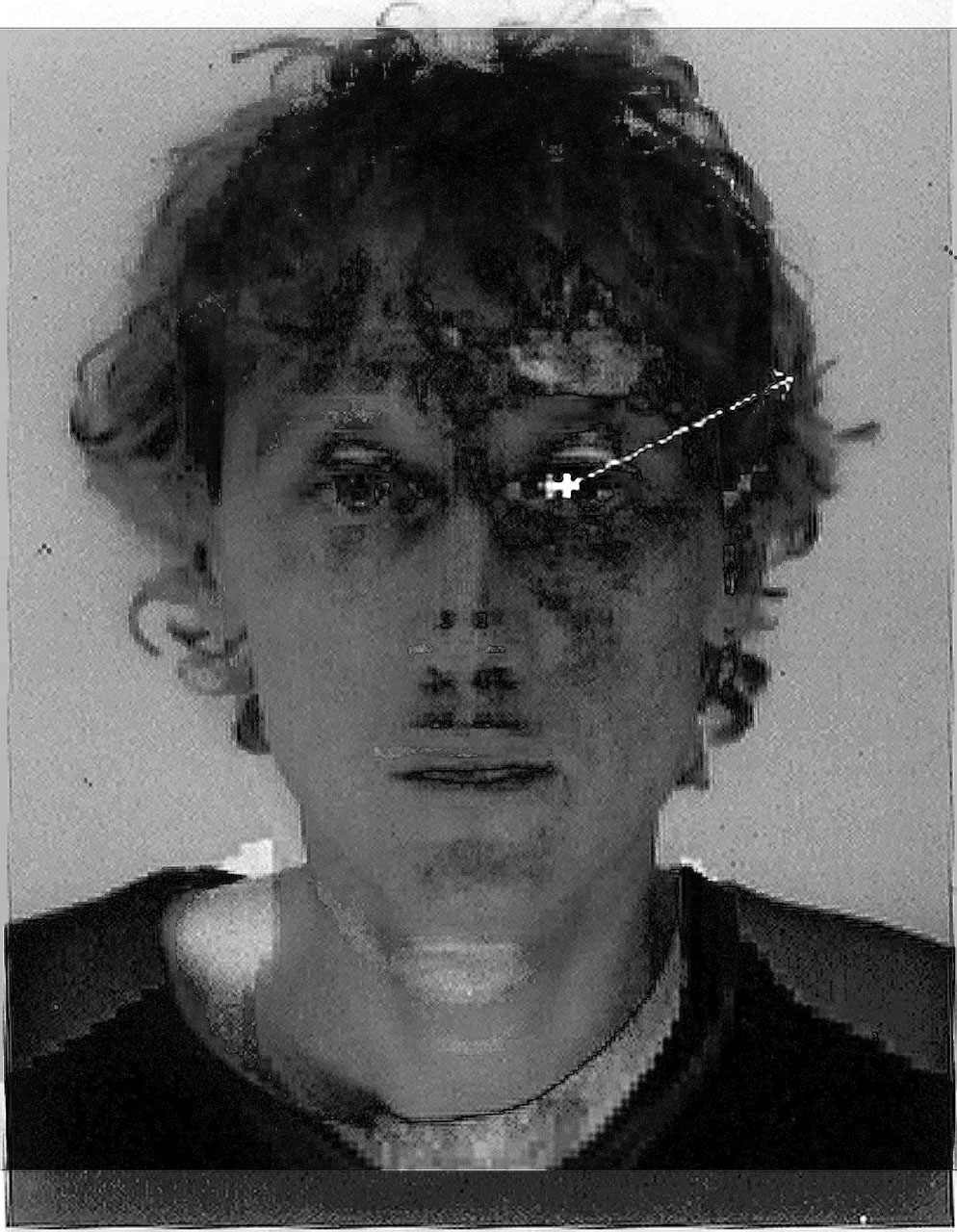
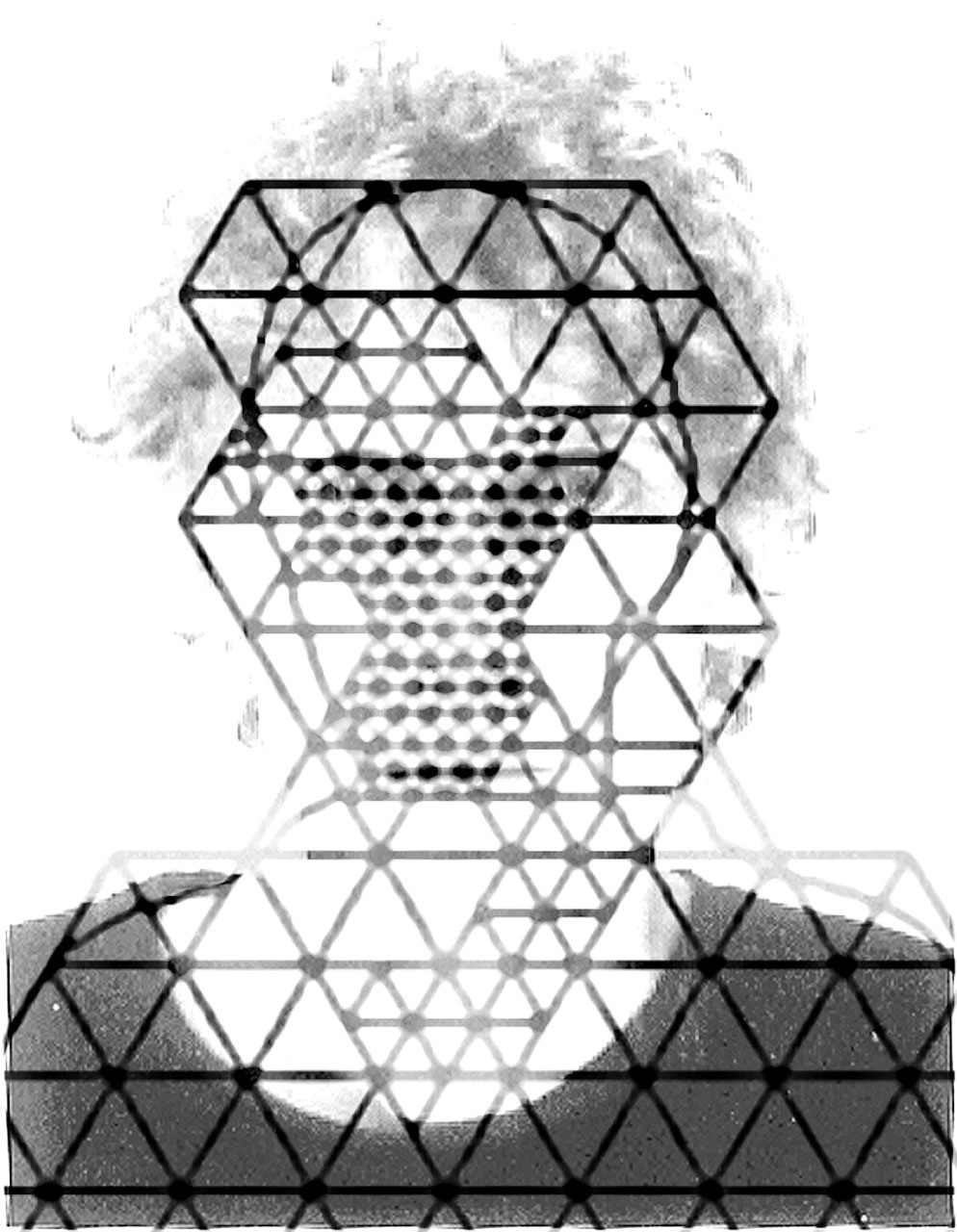
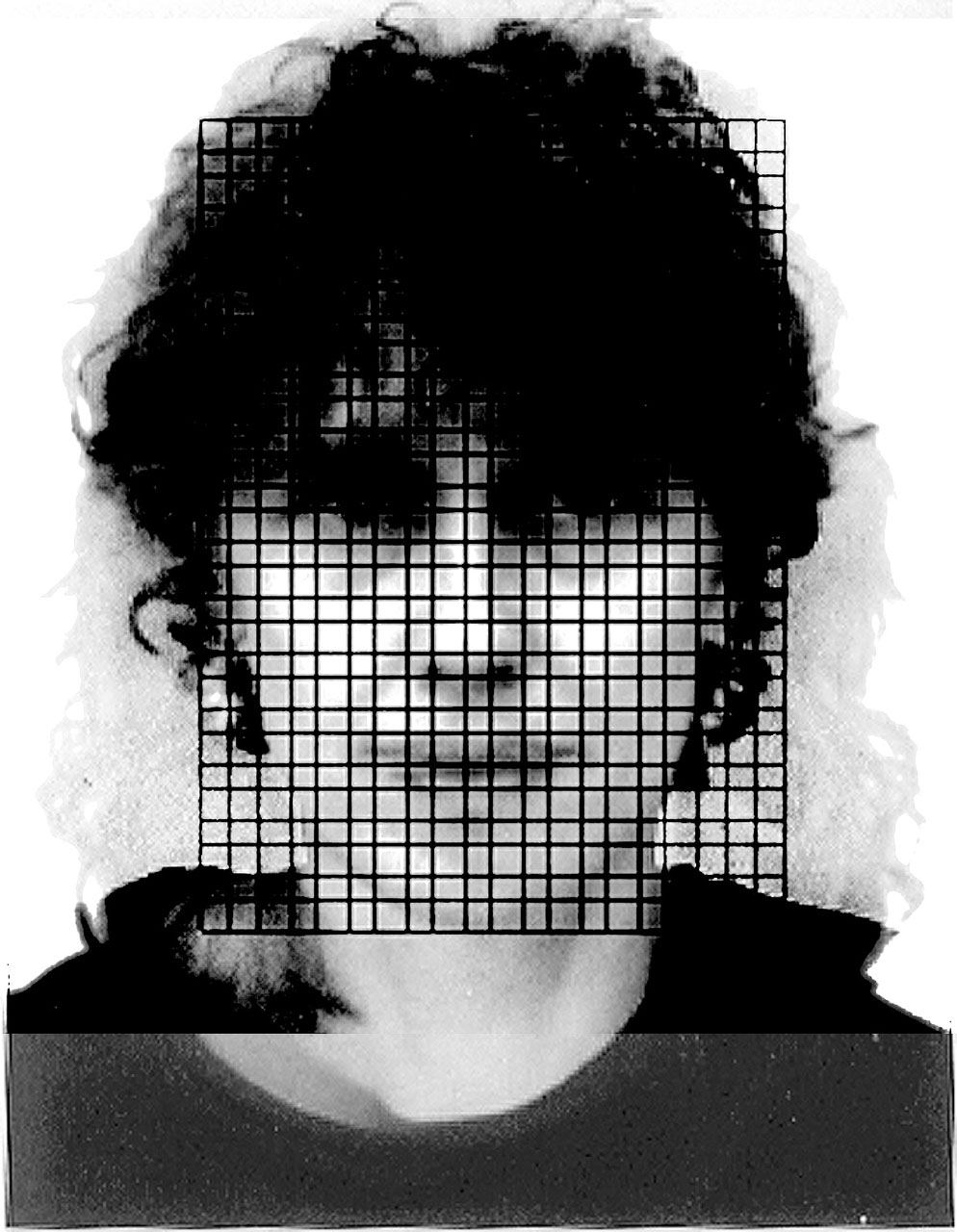
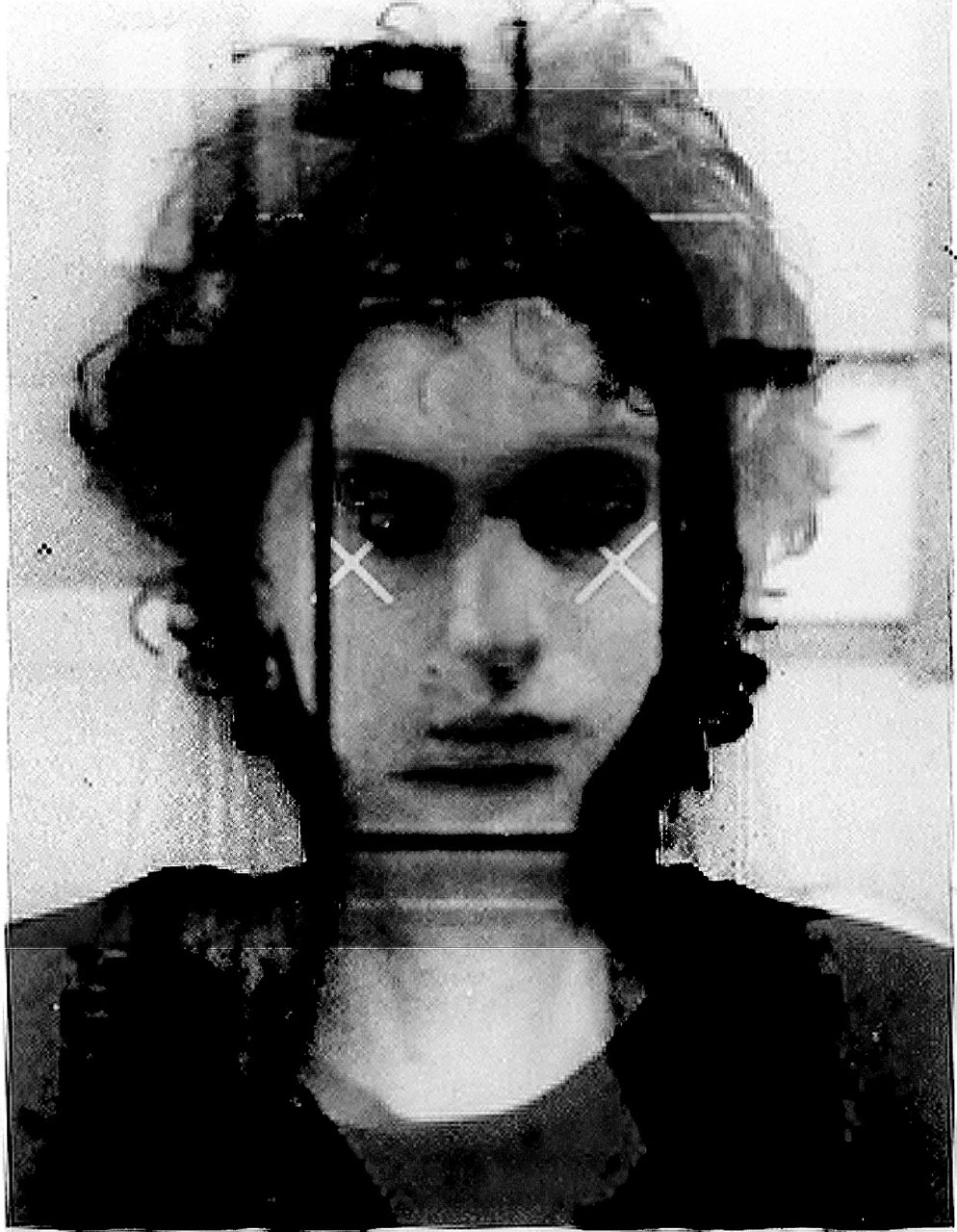
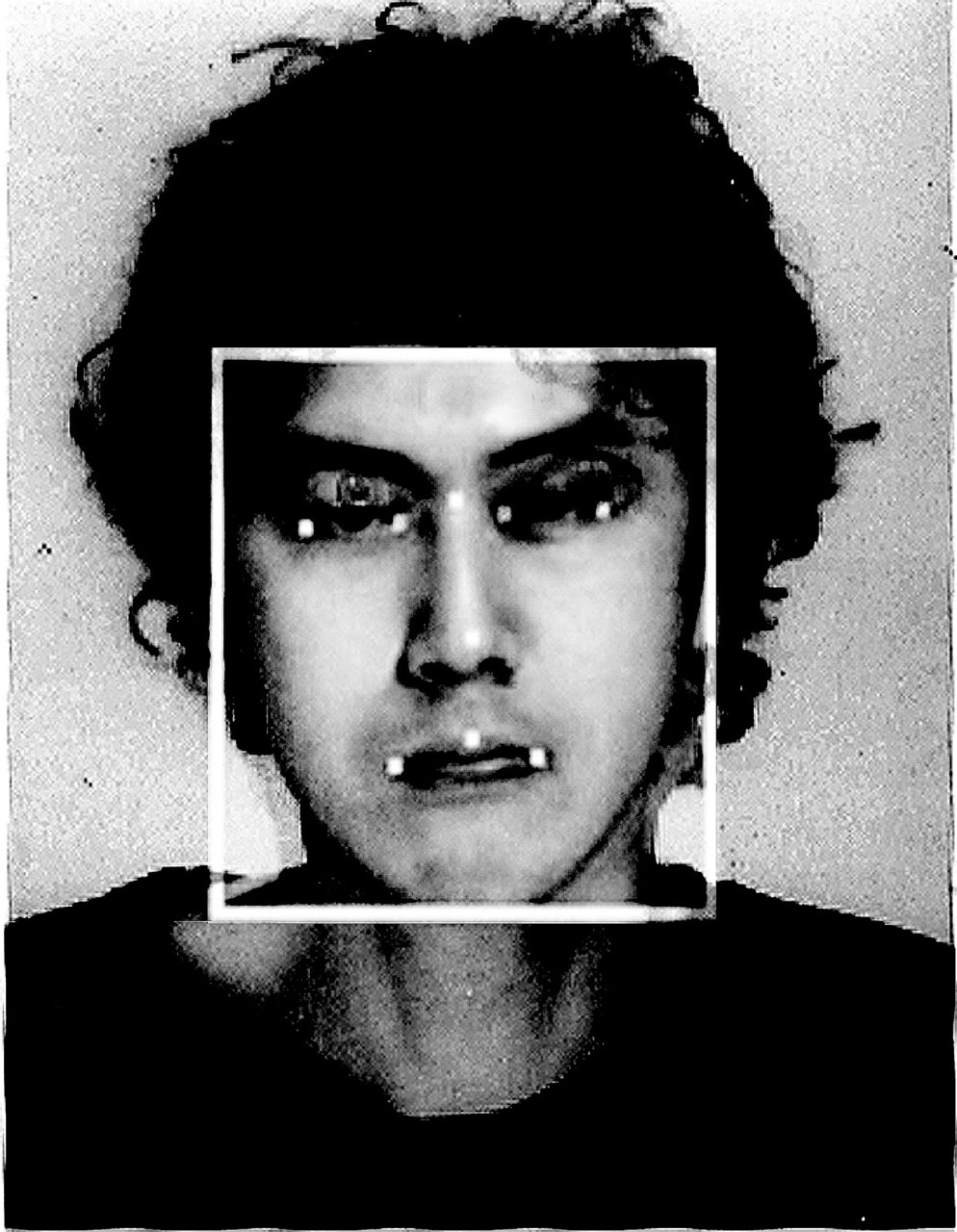
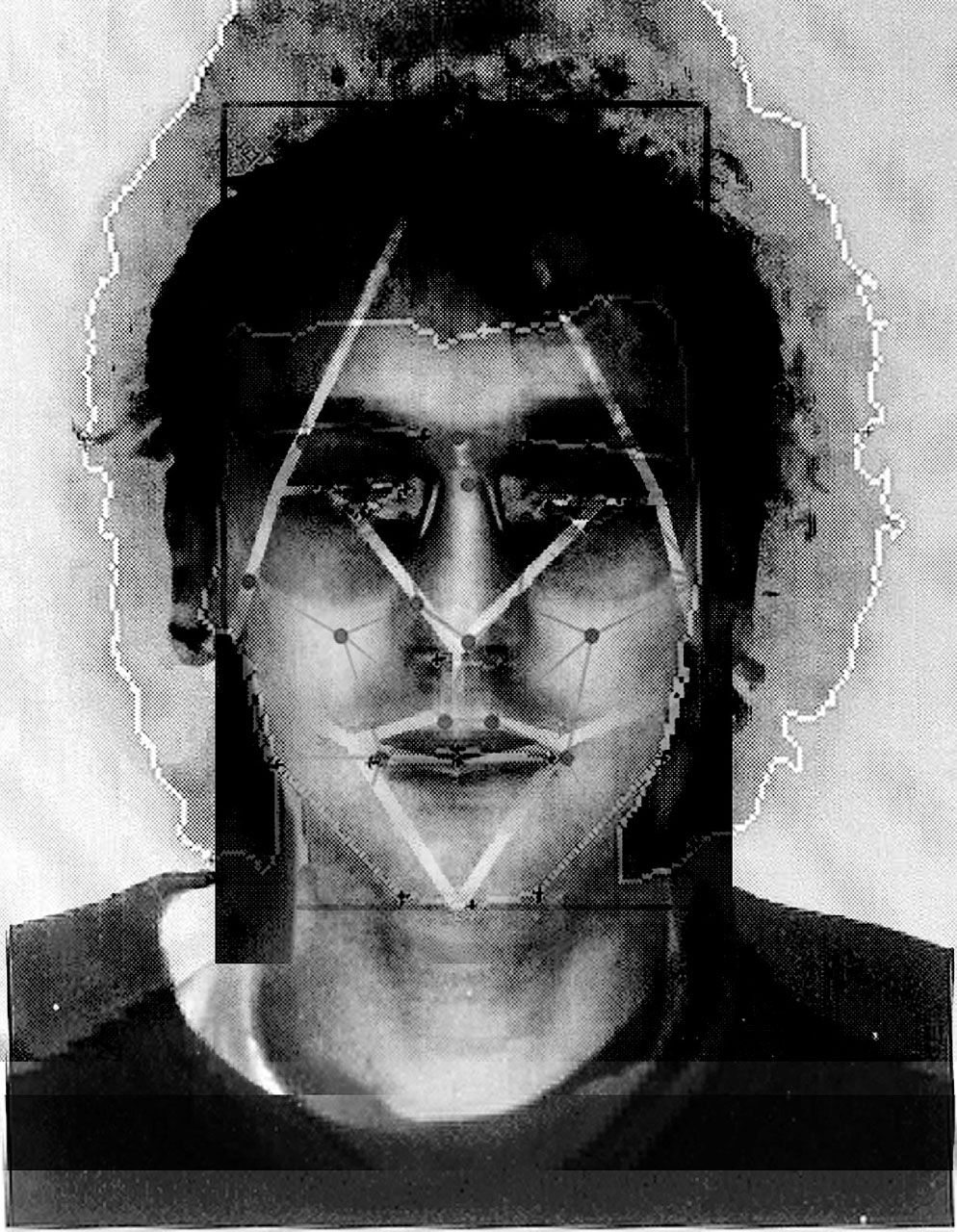
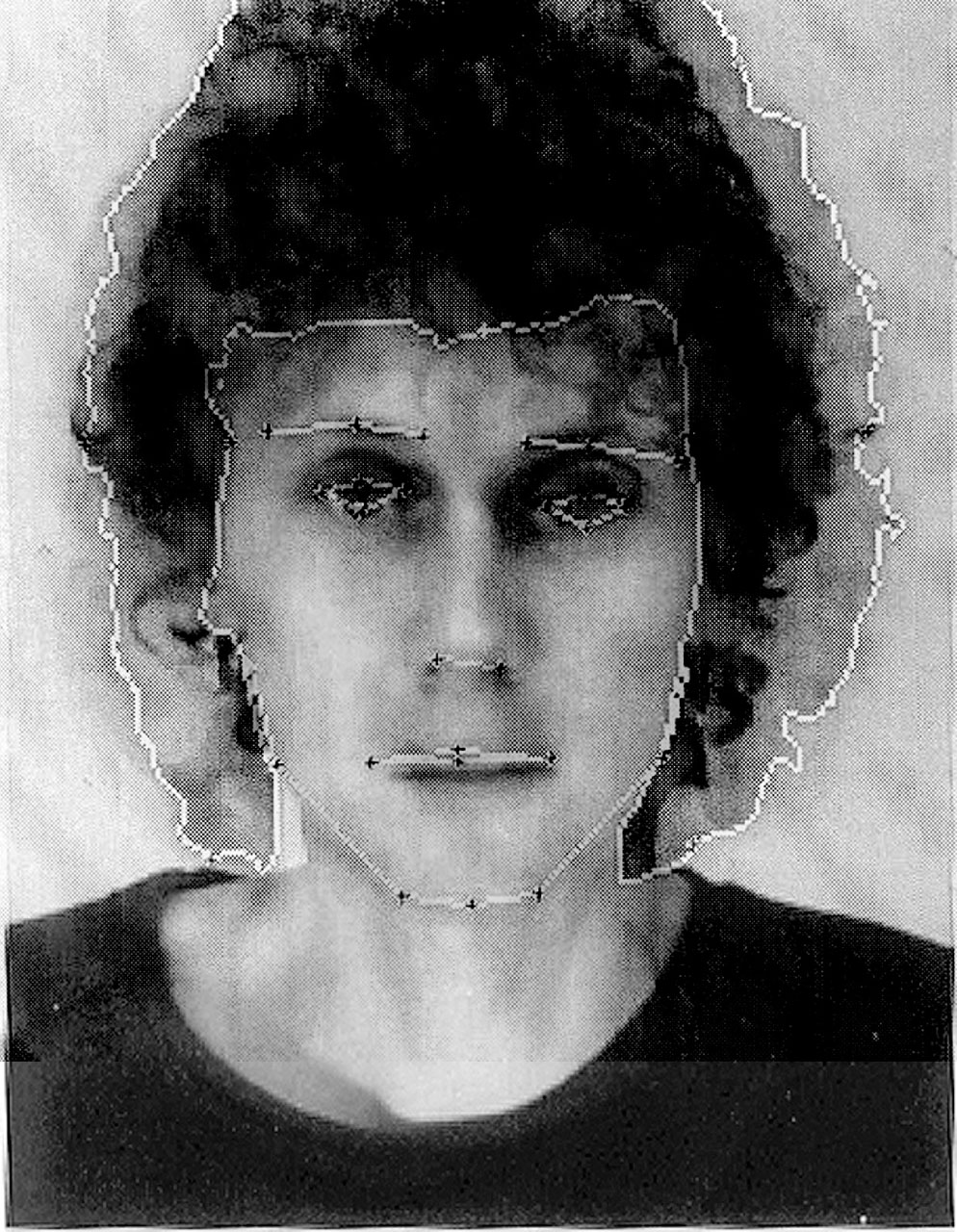
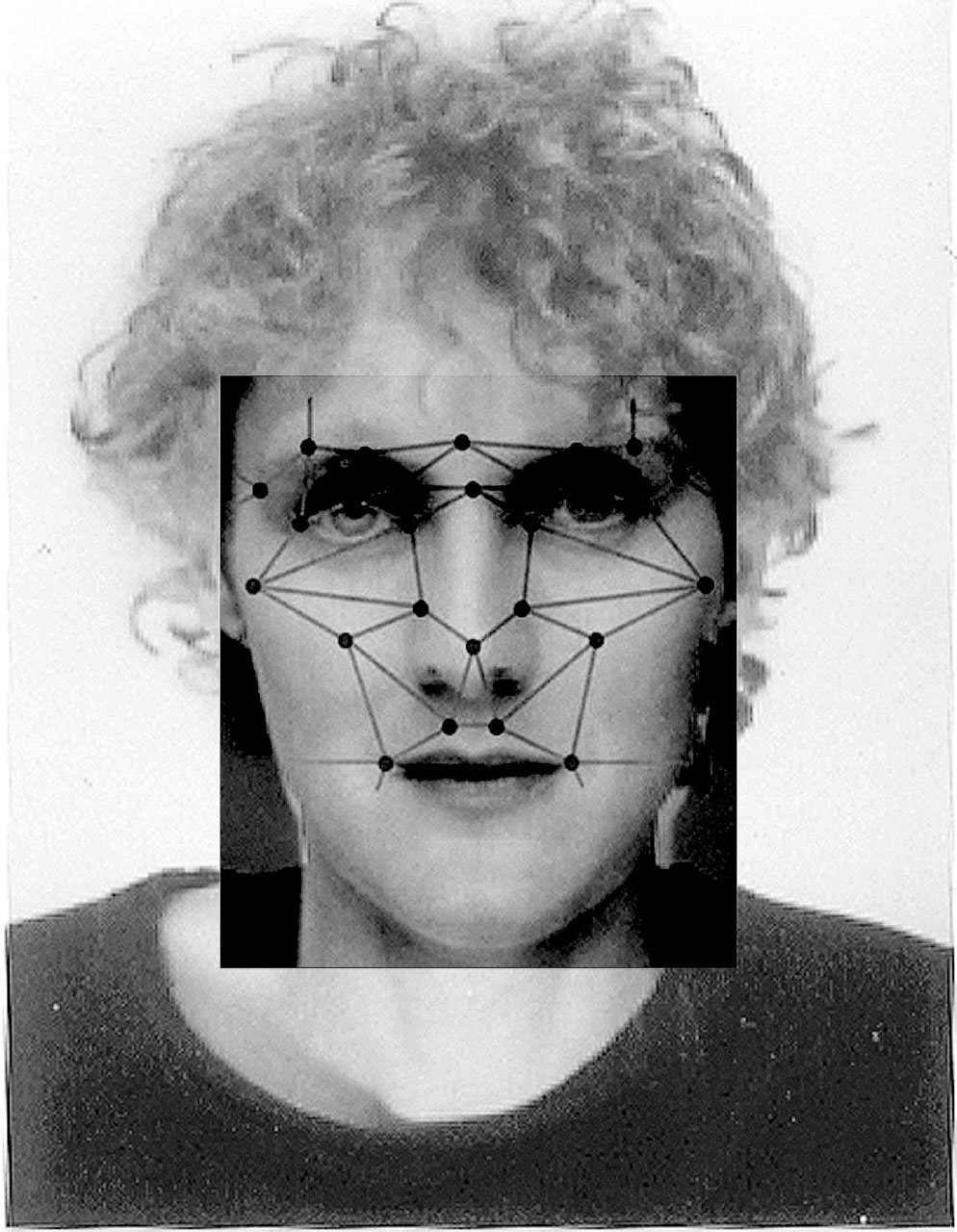
Martin Ebner
In An Ideal World, The Coordinates Of All Sensors Would Match
2004
Matthias Groebel, Untitled
1994
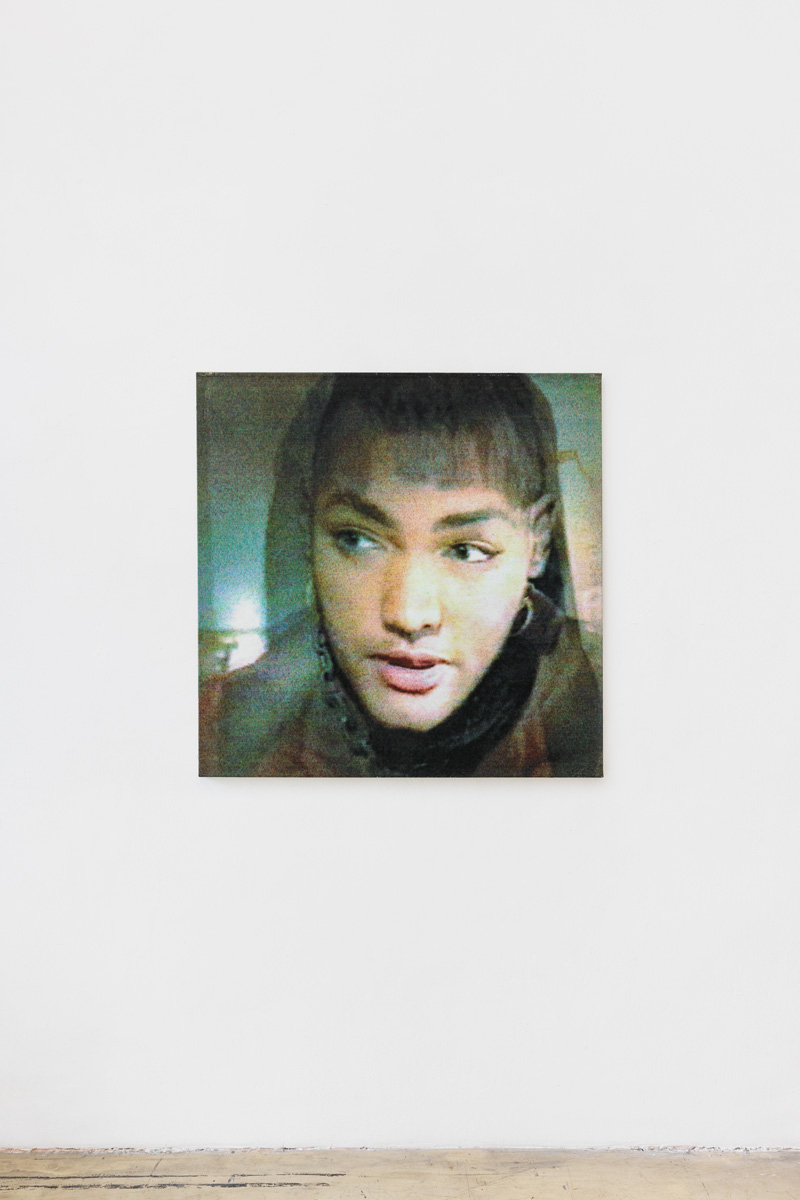
In the two works by Matthias Groebel on display, one can see dual representations of time. They date from the early 1990s and depict, on the one hand, a media landscape that was then in the process of emerging—that of early commercial television, with its commodification of large aspects of daily life as seen in game shows and reality TV. The muted color palette stems from television, captured by a painting machine invented by the artist—anonymized not only because no one knows anymore who the depicted people are, whose presence nonetheless suggests an individual existence, but also because not even the artist’s intervention endows them with a narrative. Merely a machine that applies the paint in lines, one by one, according to the artist’s choice.
Matthias Groebel, Trusted Faces, Videoloop, 1995
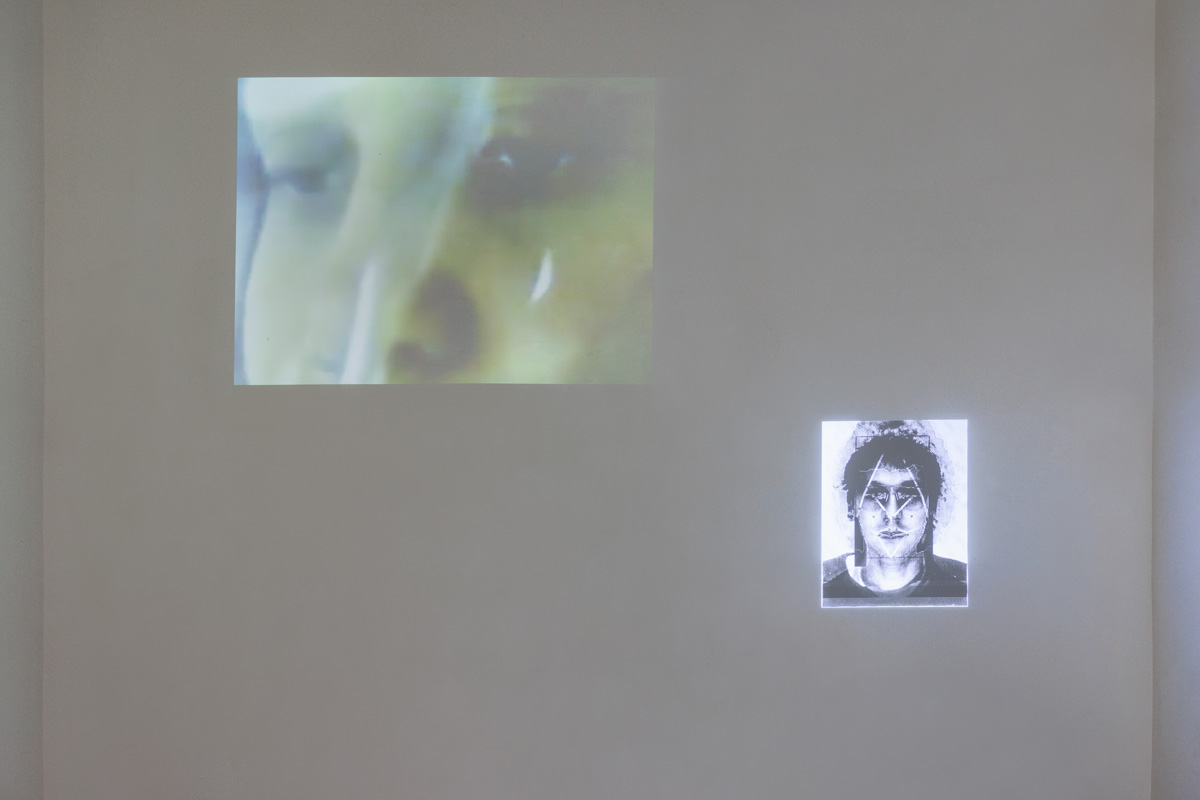
Matthias Groebel, Trusted Faces, Videoloop, 1995
Martin Ebner, In an Ideal World…, 2004
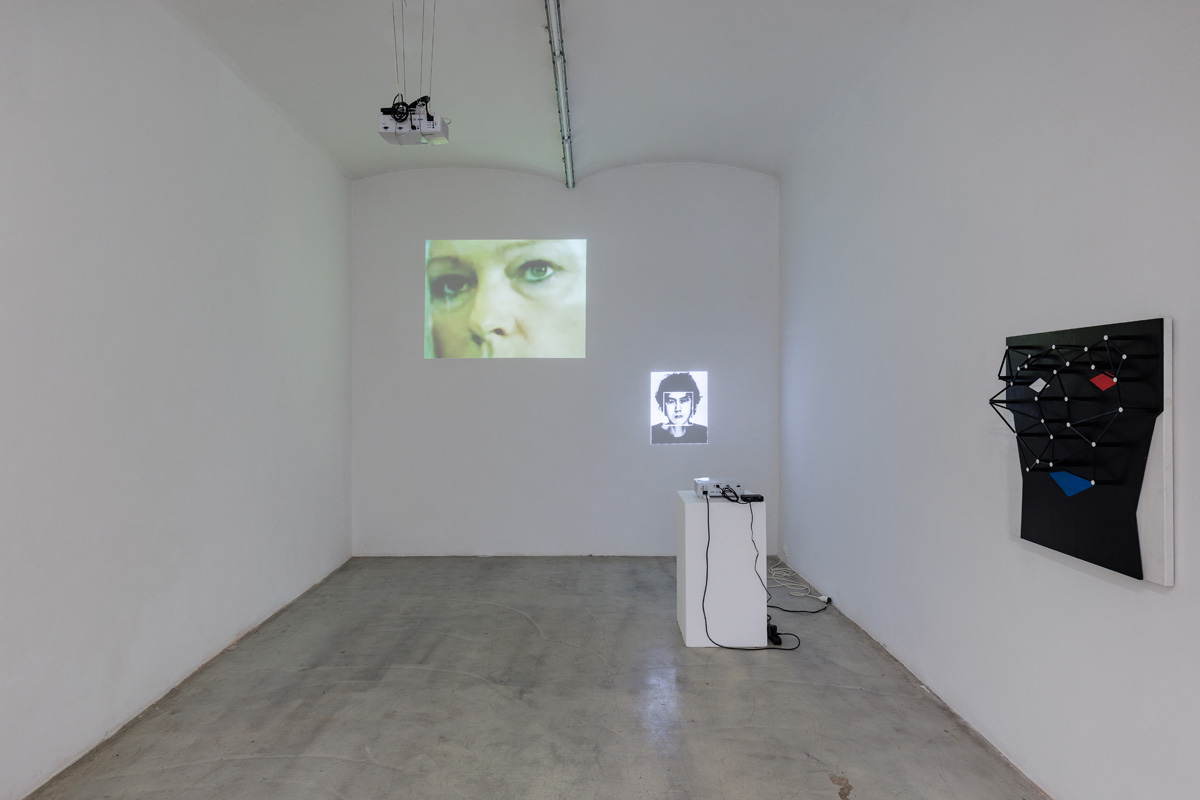
Matthias Groebel, Martin Ebner
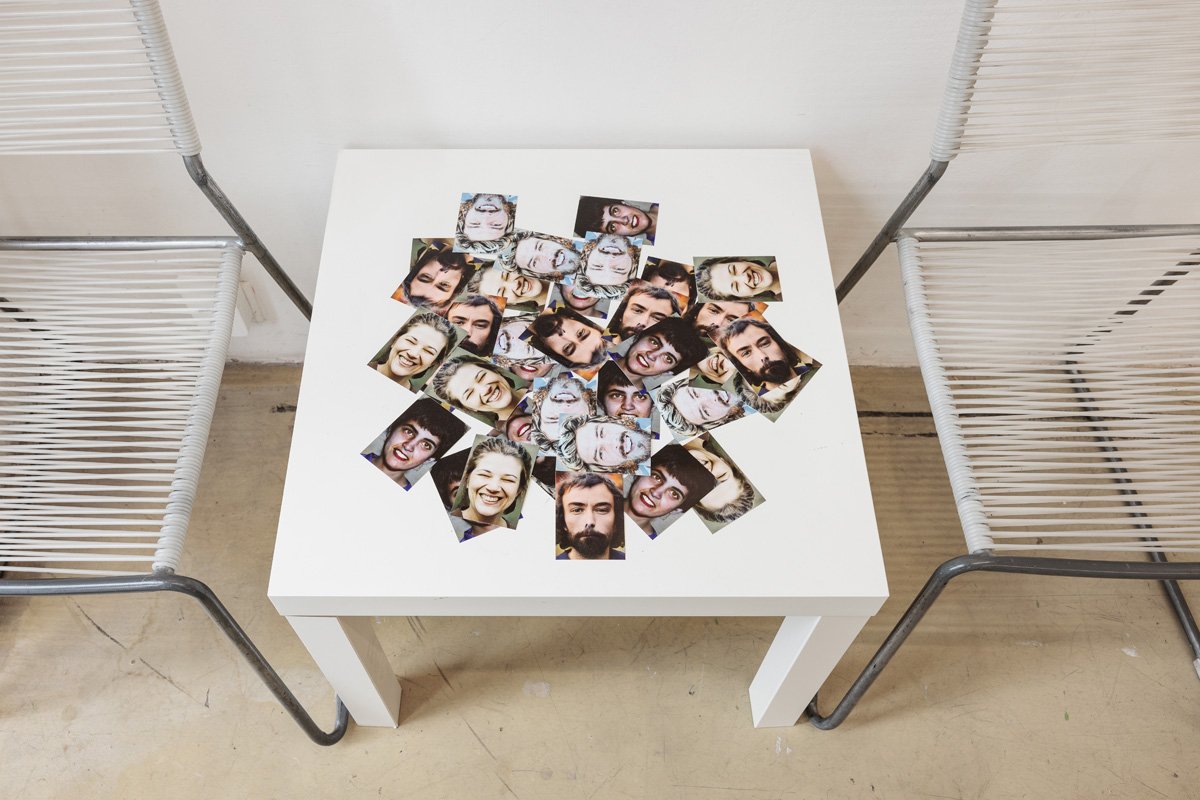
Sebastian Luetgert, Untitled
2020
This emerging trend in the technical generation of human images—which depicts not a real person but only their statistical average—is realized in contemporary discourse through the work of Sebastian Luetgert. The portraits shown here—scattered randomly across a table as if they still needed to be organized, yet always displaying the same variations—are generated by artificial intelligence, in this case StyleGAN. This involves the interaction of two computers: one that produces random data and another that, in a “hot-cold” manner, indicates the probability of being able to interpret an image of a human from that data. In this work, created in 2020, Sebastian Luetgert intervened in StyleGAN’s code and shifted the average point of the human figure to be generated. These are thus variations of human images refined by algorithms.
Ariane Müller, Romance Scam
2019
Similar “average faces,” calculated based on a specific setting, can be seen in the work of Ariane Müller, who also curated the exhibition and is the author of this text. Sent unsolicited to people perceived as female—who are likely also sorted by age and income—these are generated faces attached to so-called “romance scam” emails. One can almost see the computer cobbling together people based on banal criteria, people who mimically illustrate the misery that a conventional heterosexual logic of desire has prescribed for women. In this case, they were not further processed or radicalized by a modified program, but rather through small, hand-drawn interventions by a human.
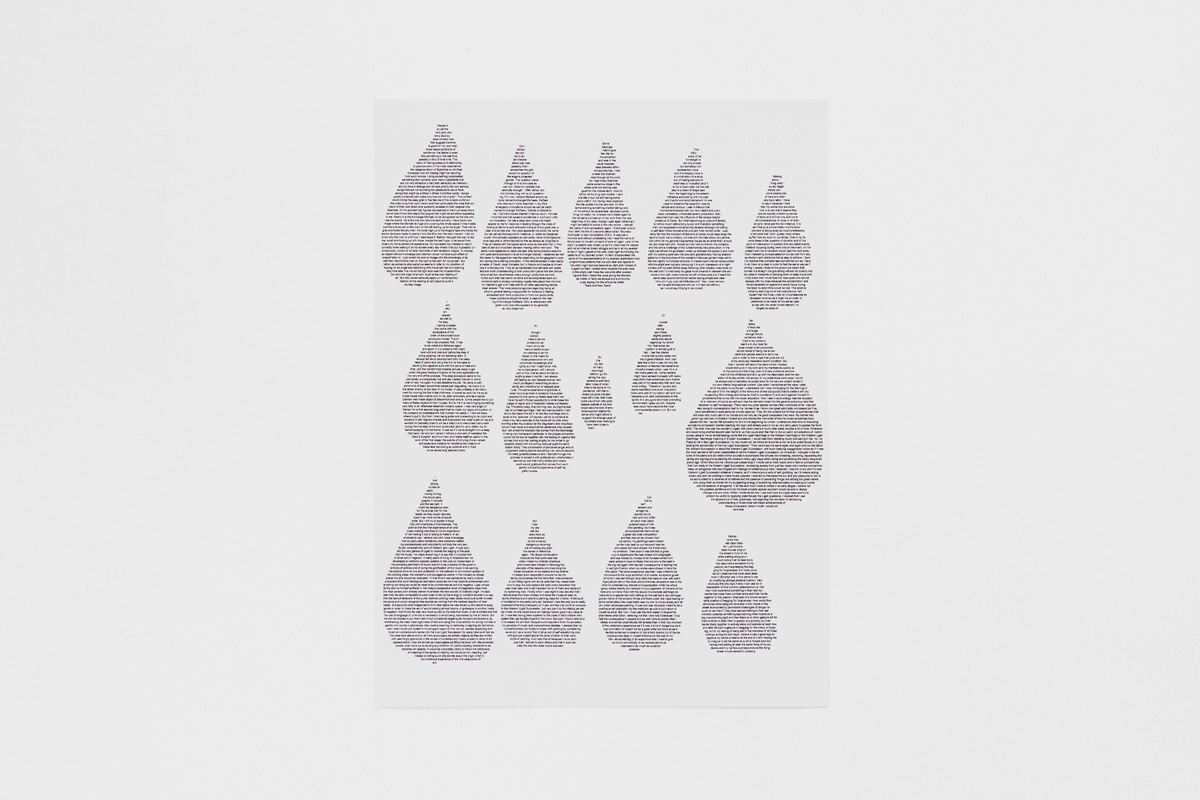
Josef Strau, Tears and New Tears. Poster no. 5
2018
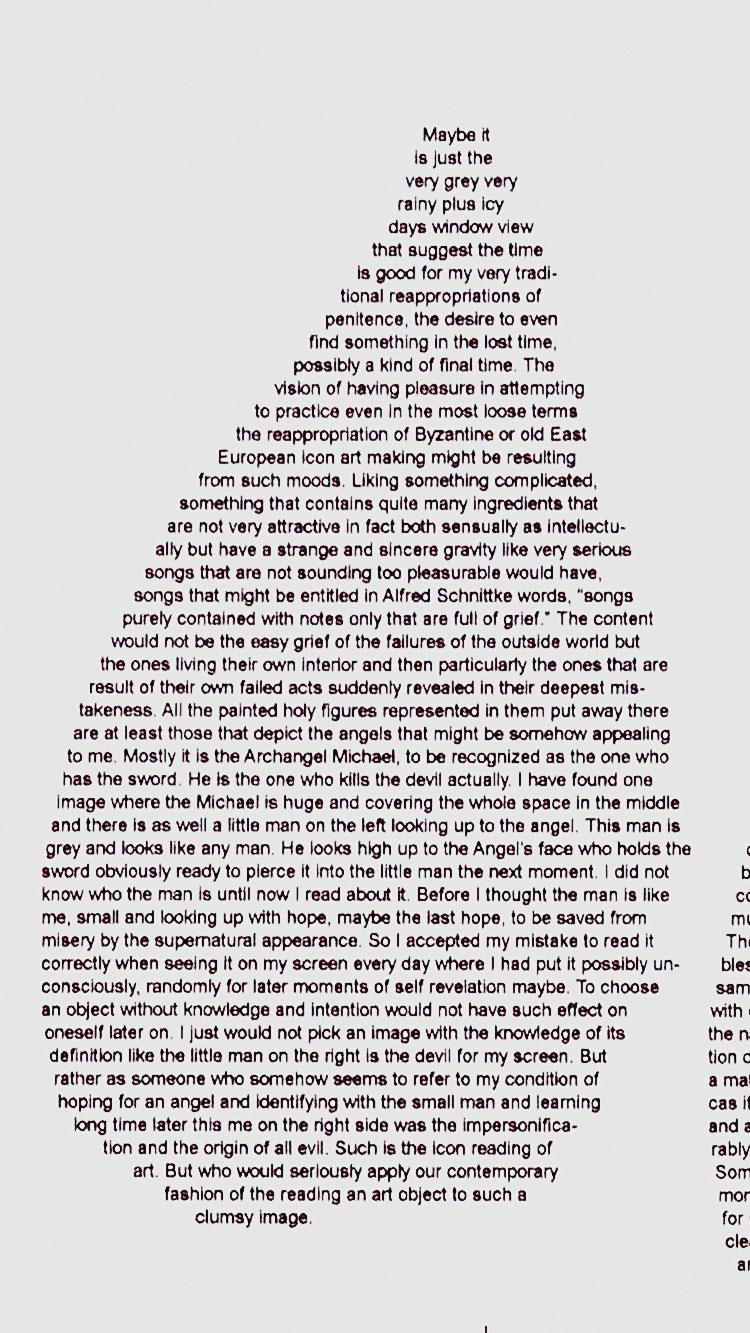
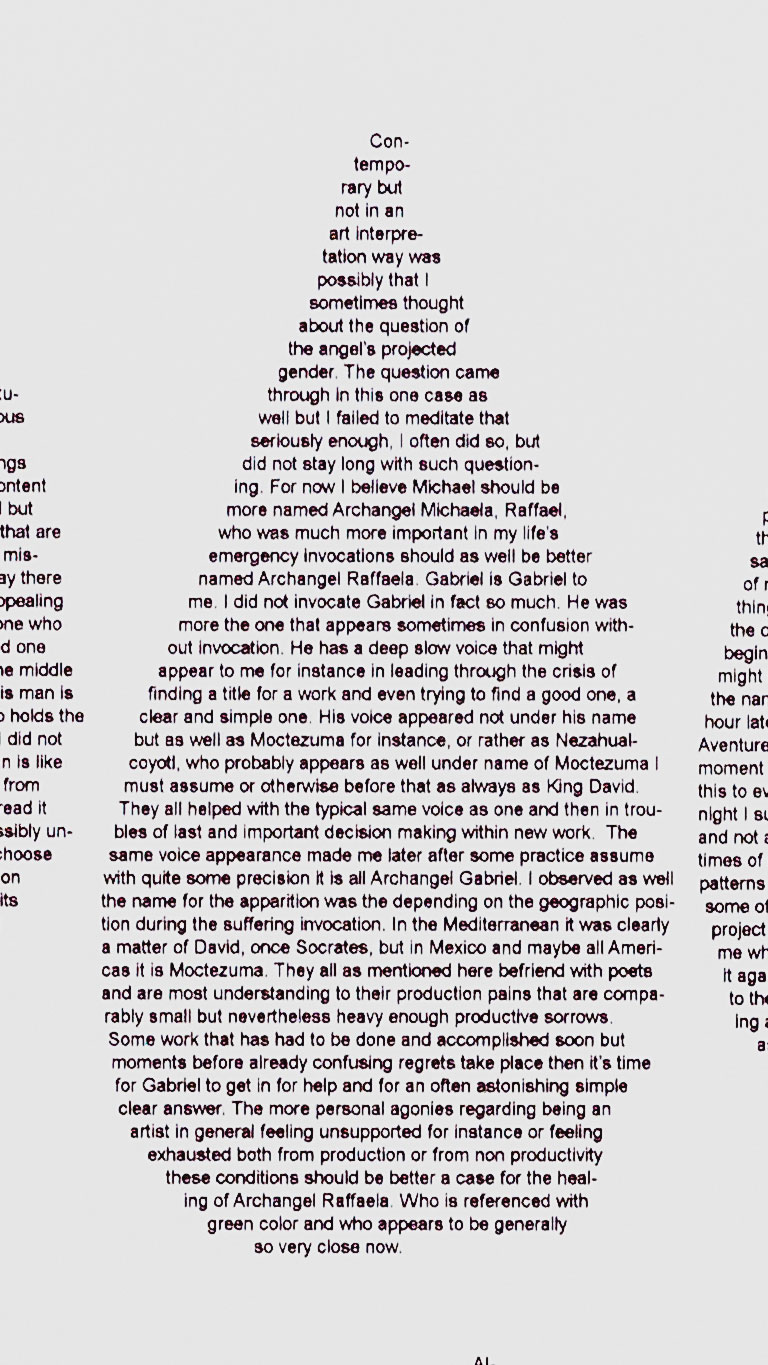
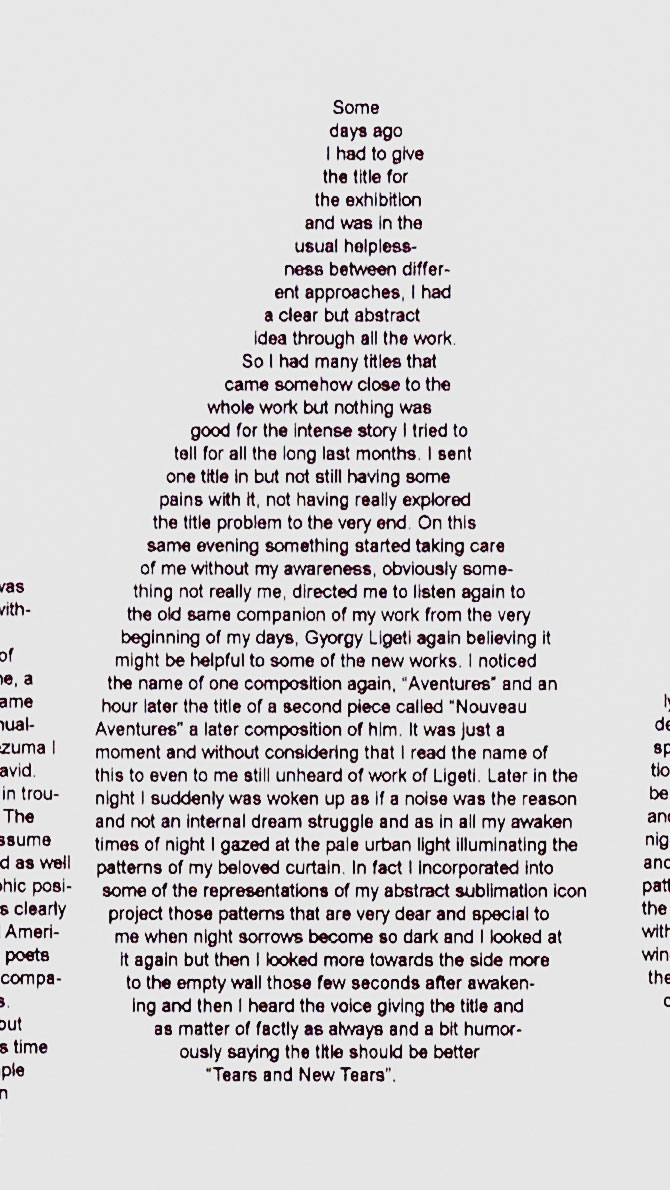
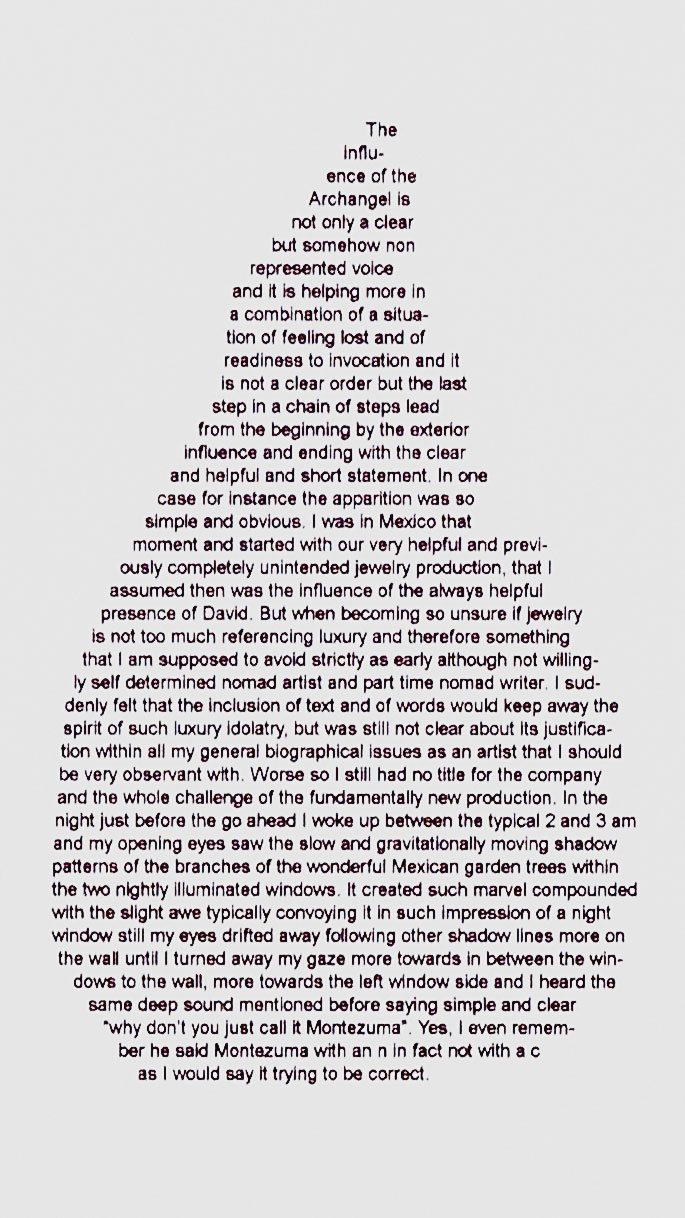
In contrast to this imitatio, Josef Strau focuses on the mimetic gesture itself—language—that is, the possibility not only of conveying experiences and feelings but also of developing them in the first place through writing or storytelling. In the text-image shown in the exhibition, this occurs in two ways: language is folded back into its image—the sadness / the tear—just as it unfolds as text from the event itself. Here, not only the portrait but also the person, life itself, emerges through writing.
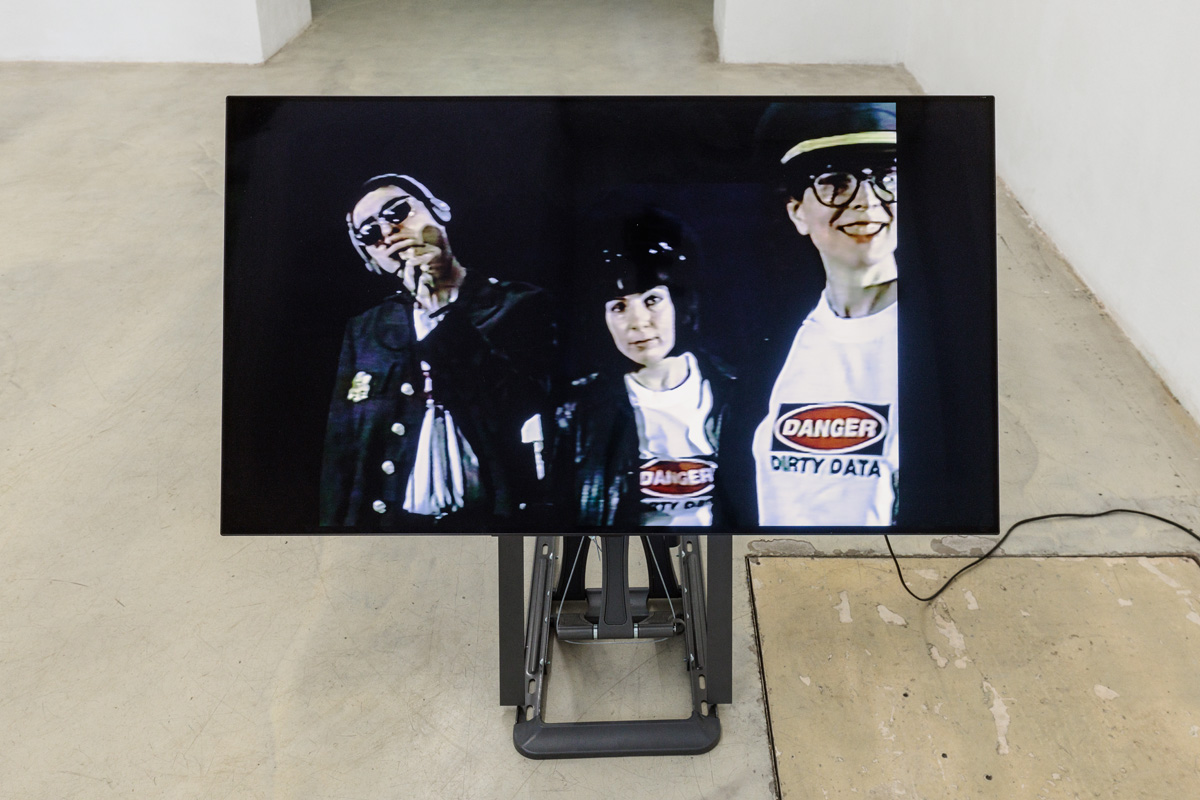
A 40-minute pilot episode by Julia Scher, filmed for a planned—but ultimately unrealized—show on the music channel MTV, uses a lively talk show format to engage in a critical discourse on the rapid spread of total surveillance of public spaces since the 1980s—a practice marketed as a security measure. In this case, as a television program featuring various activists from the queer community, it explores cruising, the playful subversion of control, and the importance of anonymity in the search for common ground.
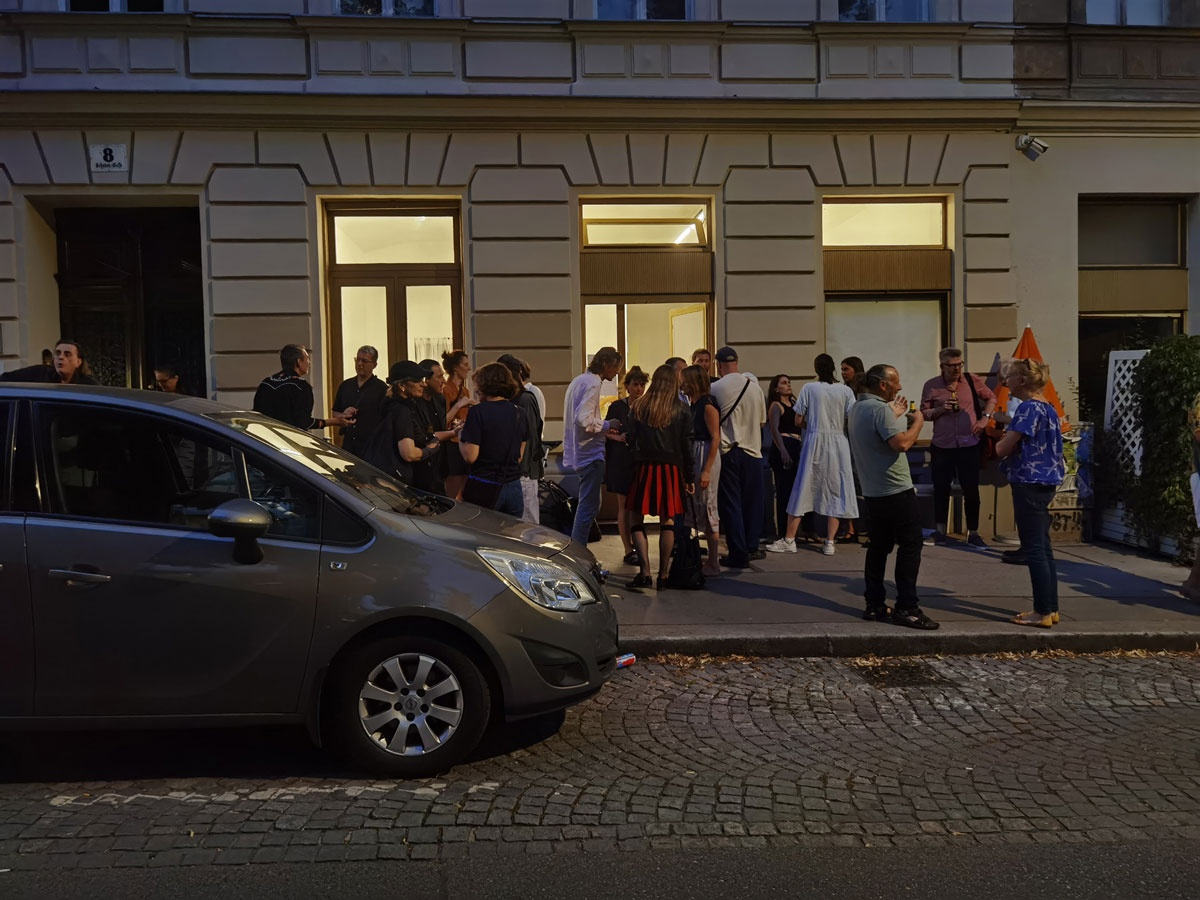
We would like to extend our heartfelt thanks to all the artists, participants, supporters, lenders, and sponsors.
Special thanks to Lisa Jäger, Philipp Pess, and Amer Abbas.