

Marinoni Tennis Club
Ariane Mueller, Martin Ebner
2015, Lido di Venezia, Italy
Institution:
Pane per Poveri – Stefania Palumbo, Eleonora Meoni
Location:
The space in front of Teatro Marinoni, Lido, Venezia
Duration:
June 2015, one week, during the opening days of Biennale di Venezia
Synopsis:
Pane Per Poveri, a project by Stefania Palumbo and Eleonora Meoni, invited various artists, poets, and DJs for what became known as the “Berghain pavillon” during the opening week of the 56th Bienale di Venezia in 2015.
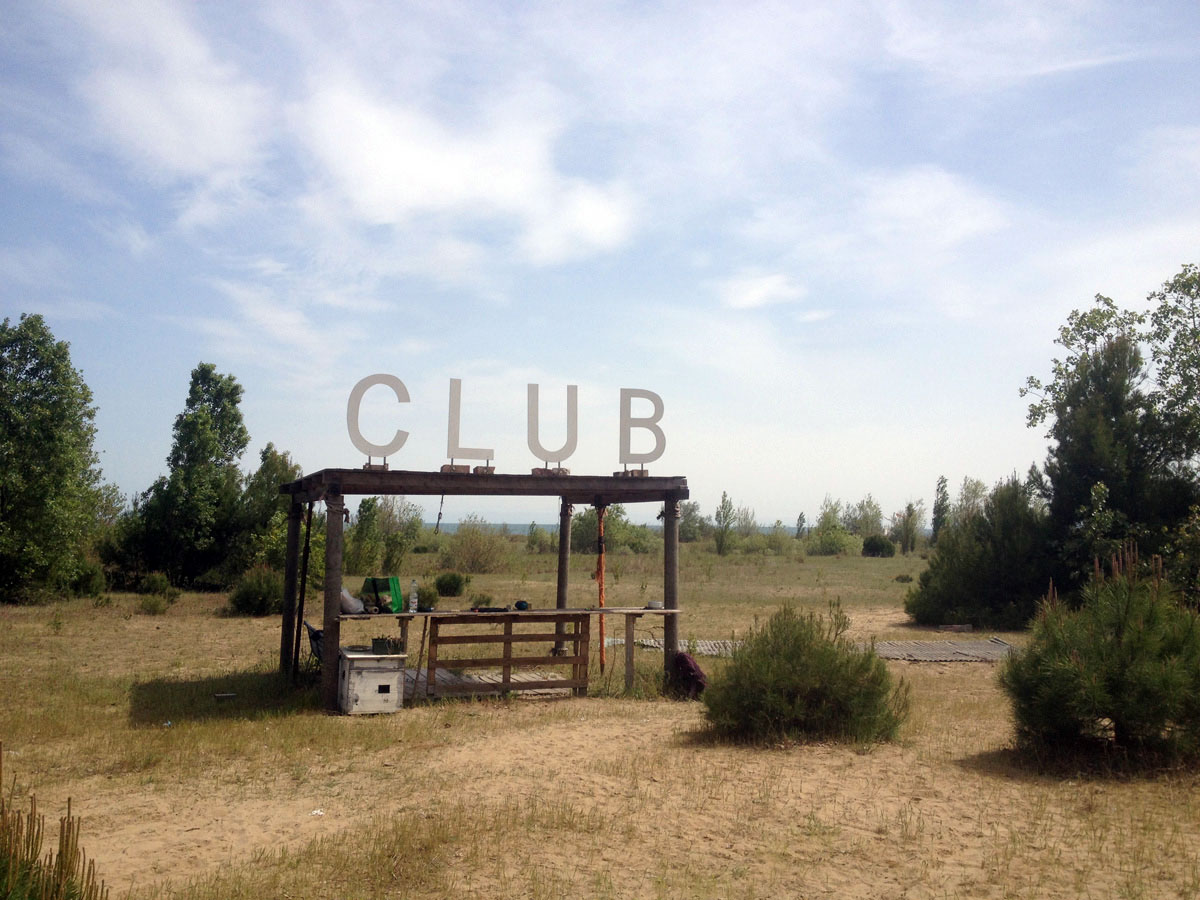
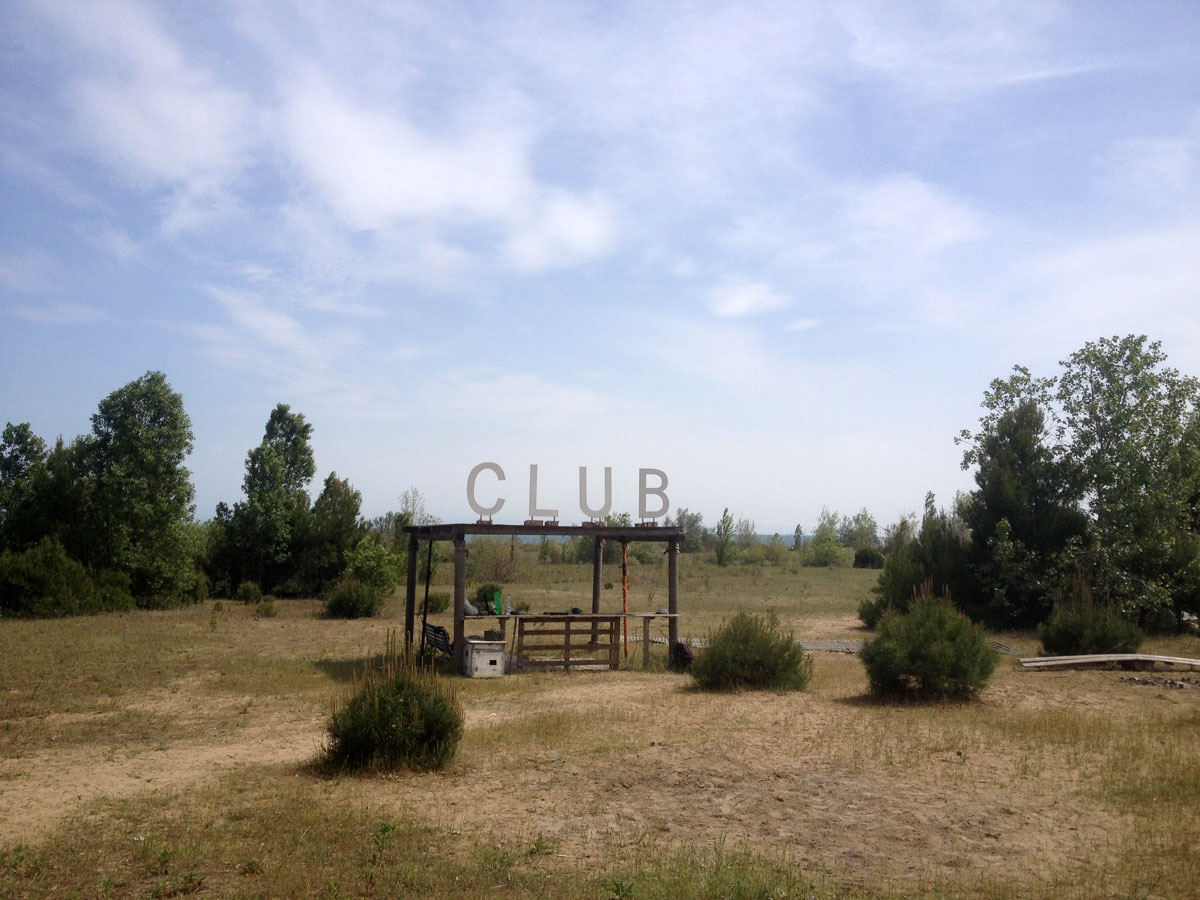
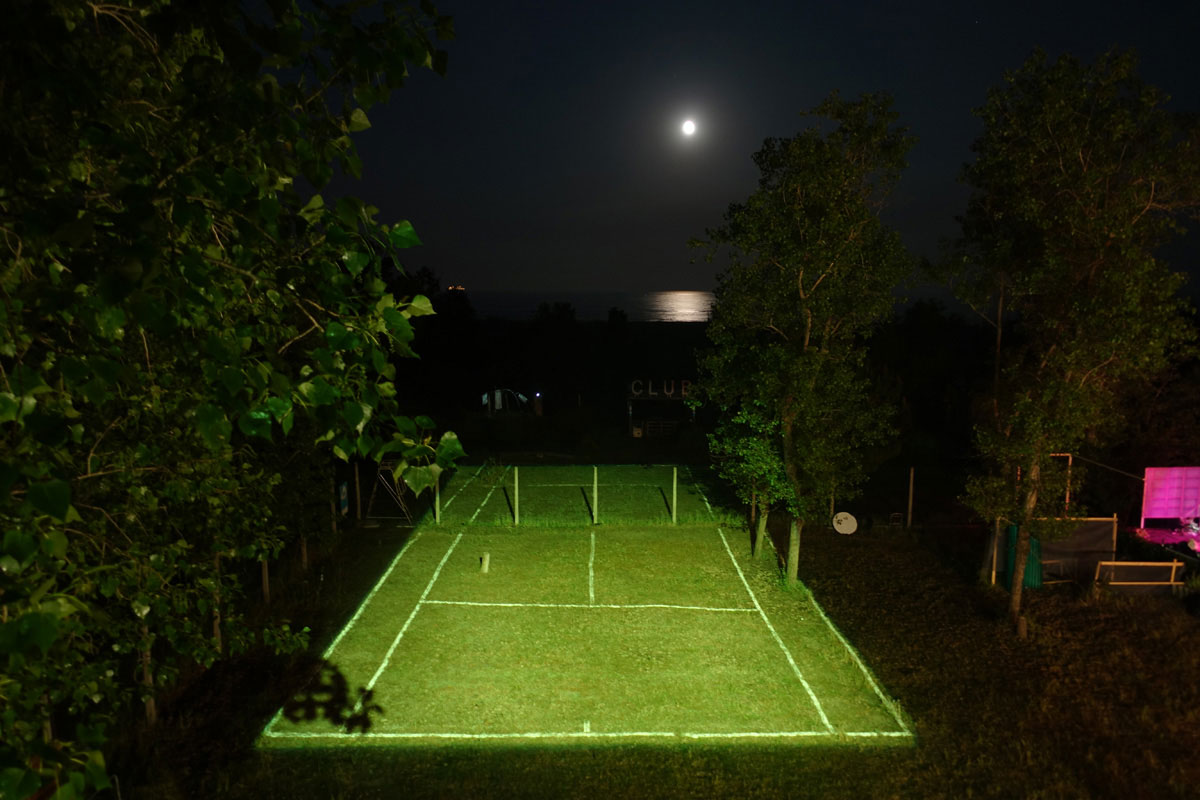
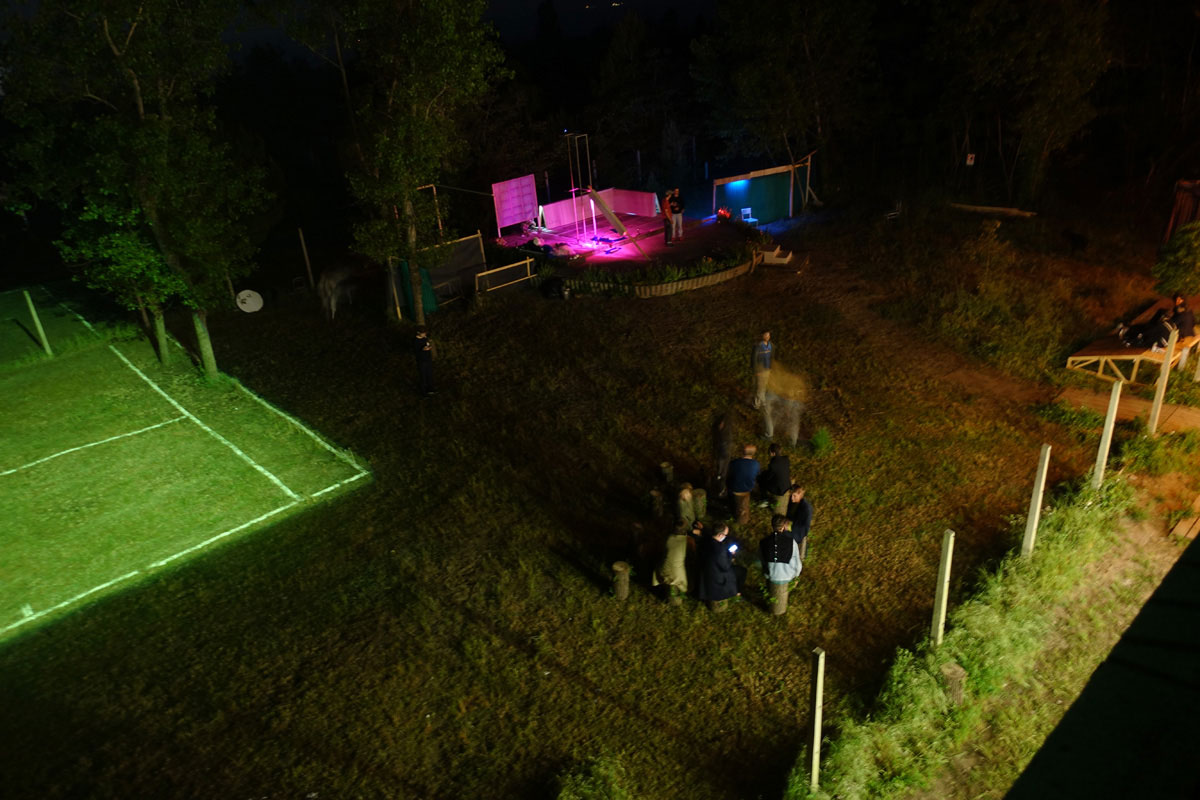
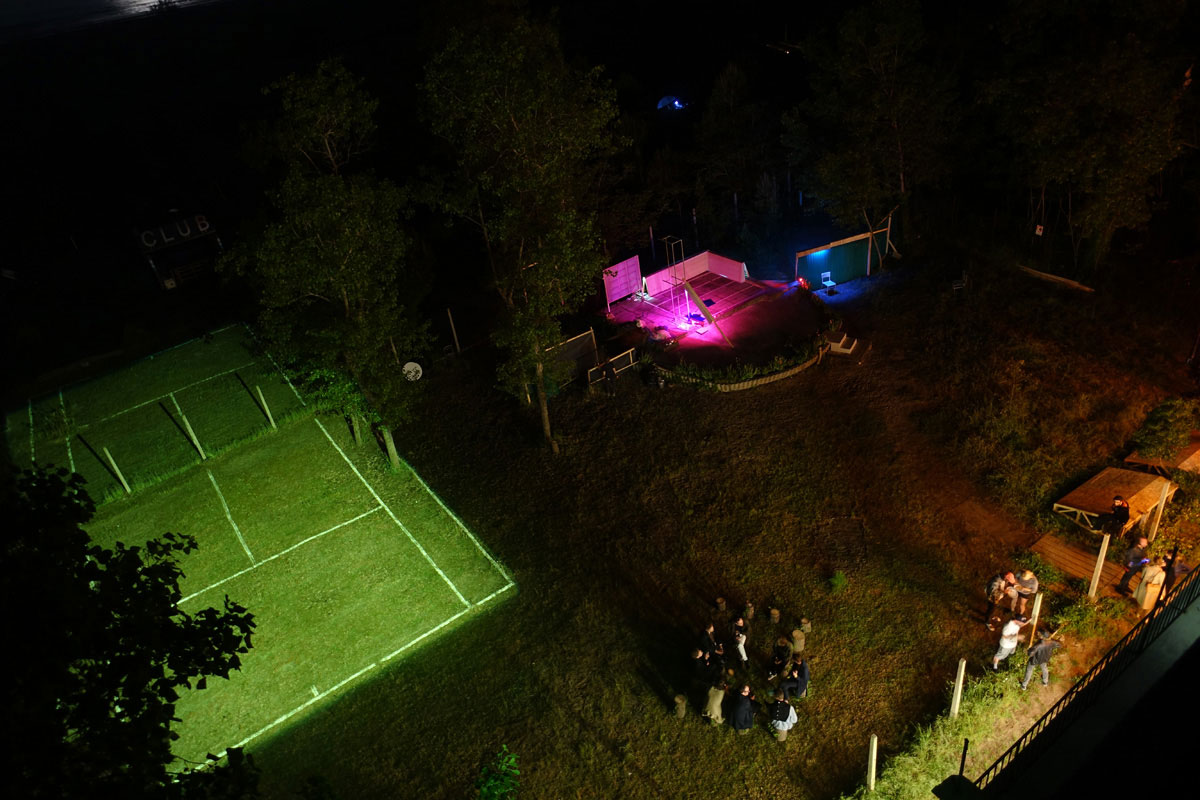
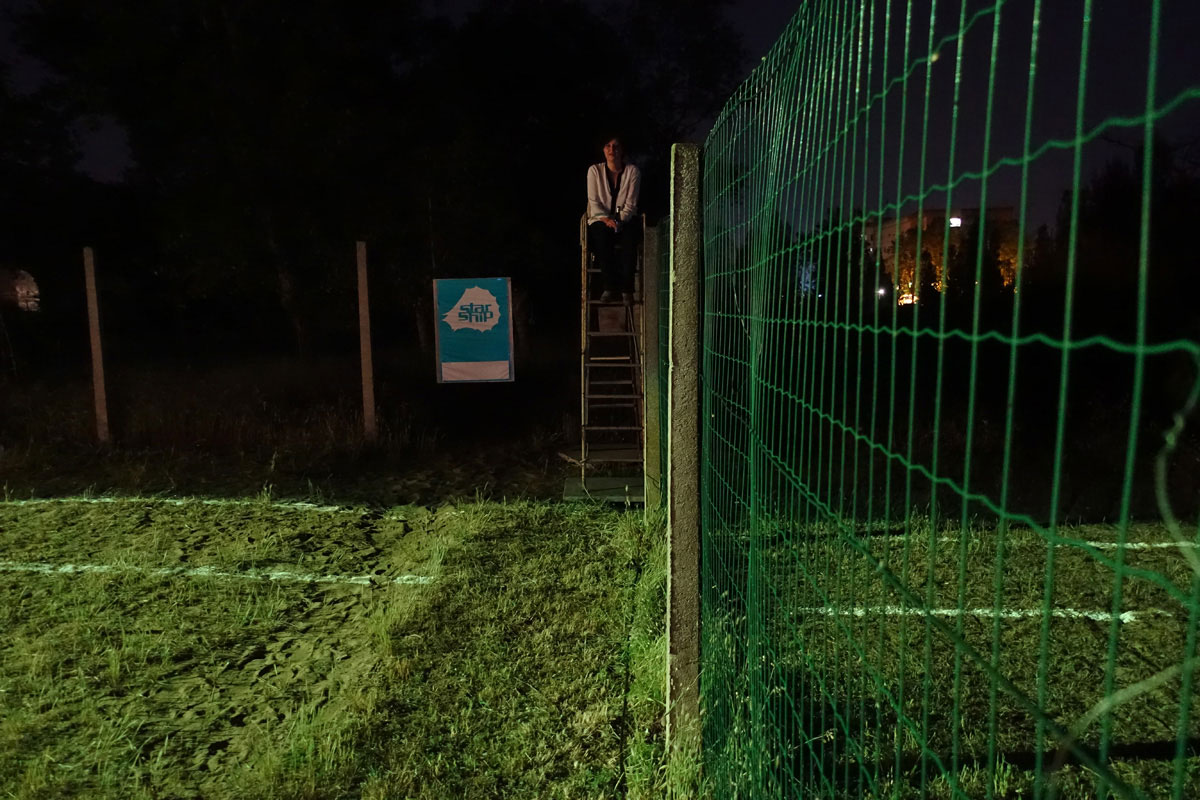
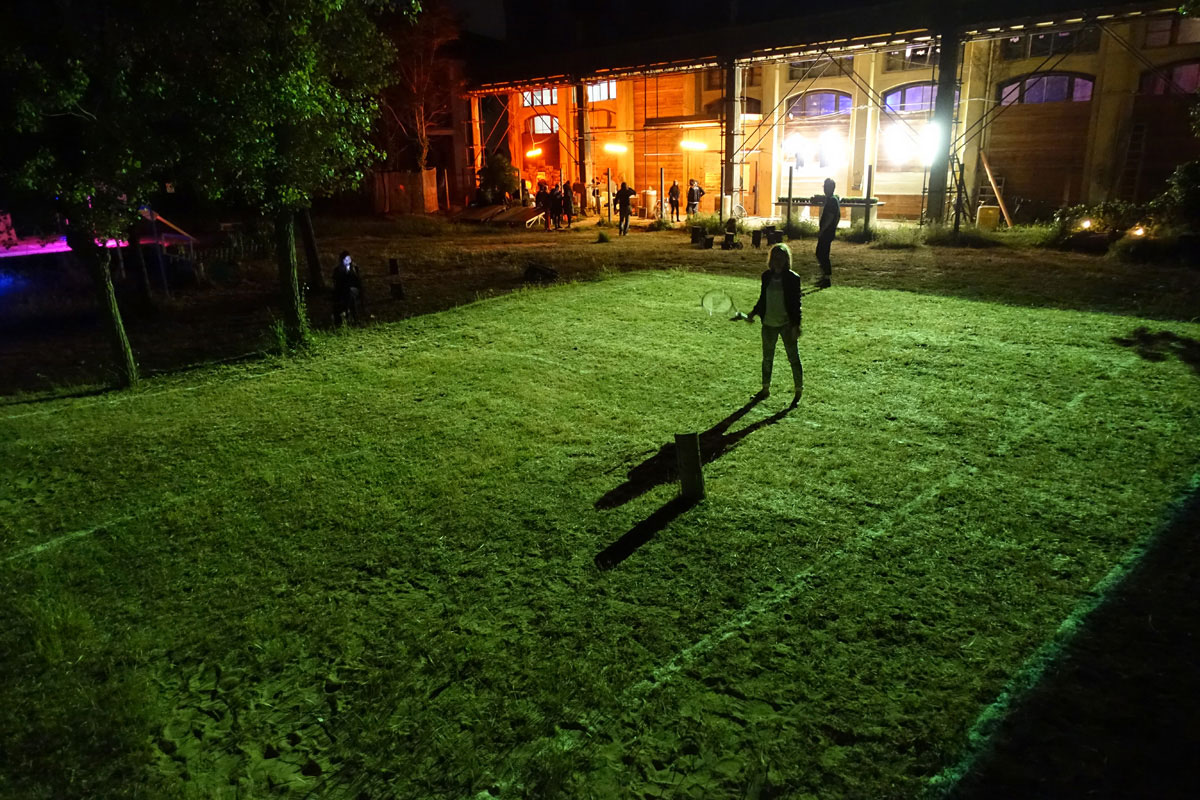
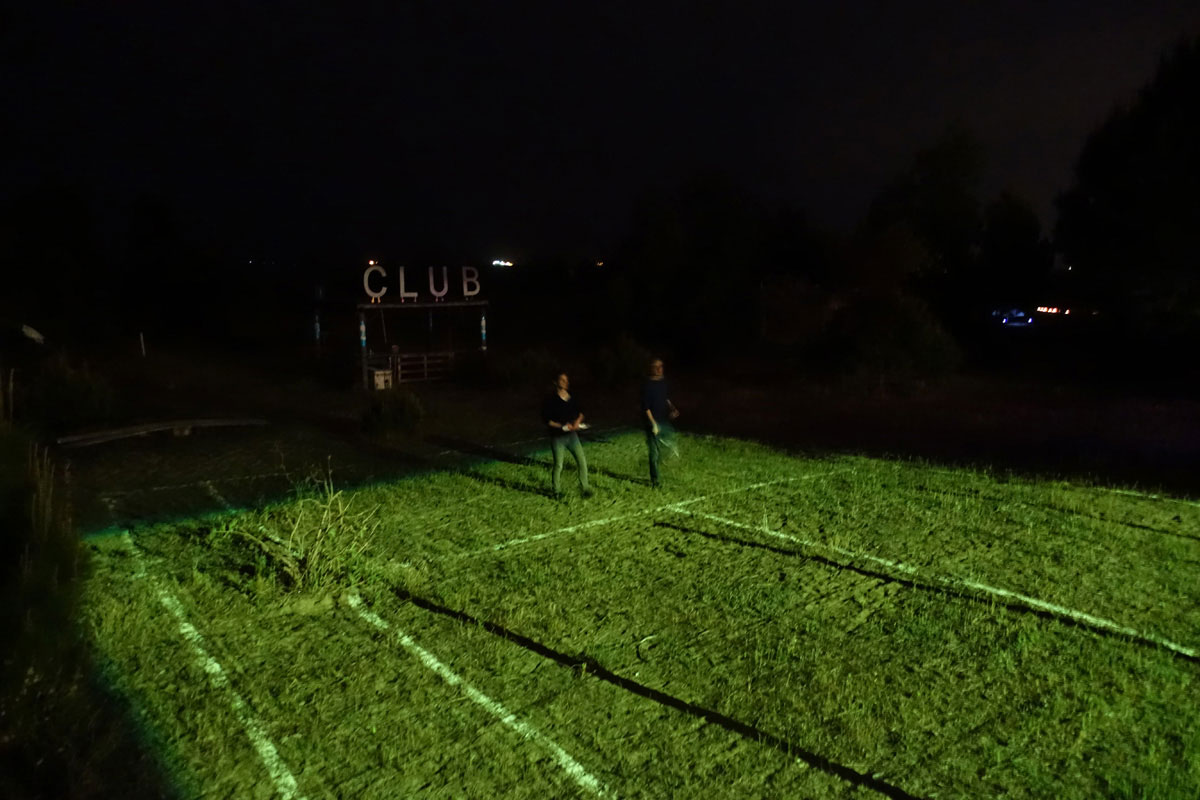
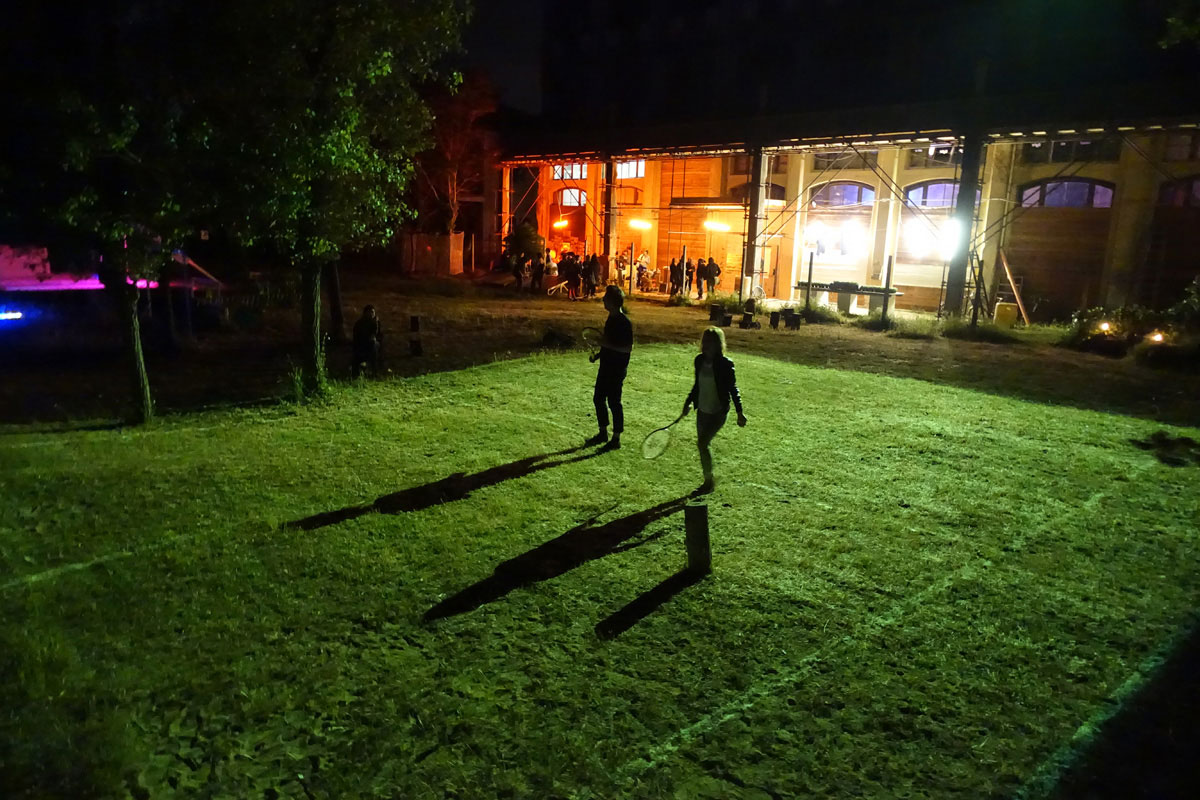
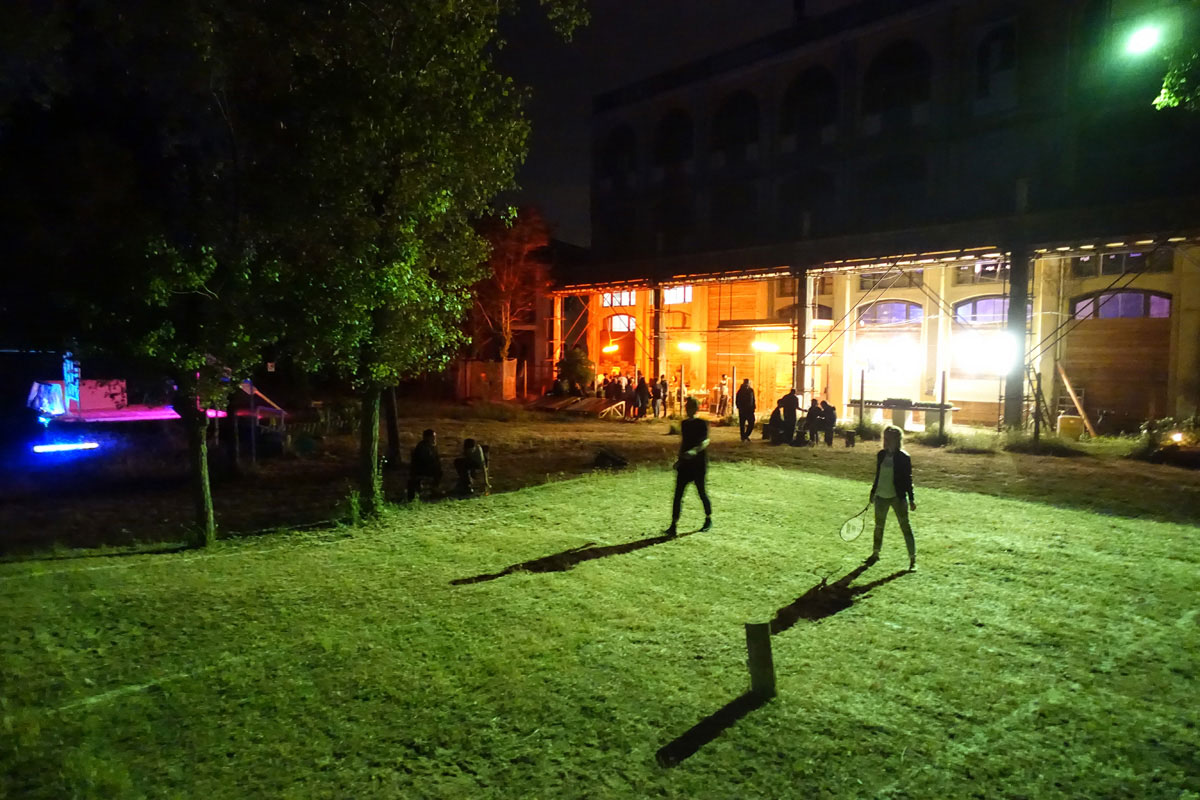
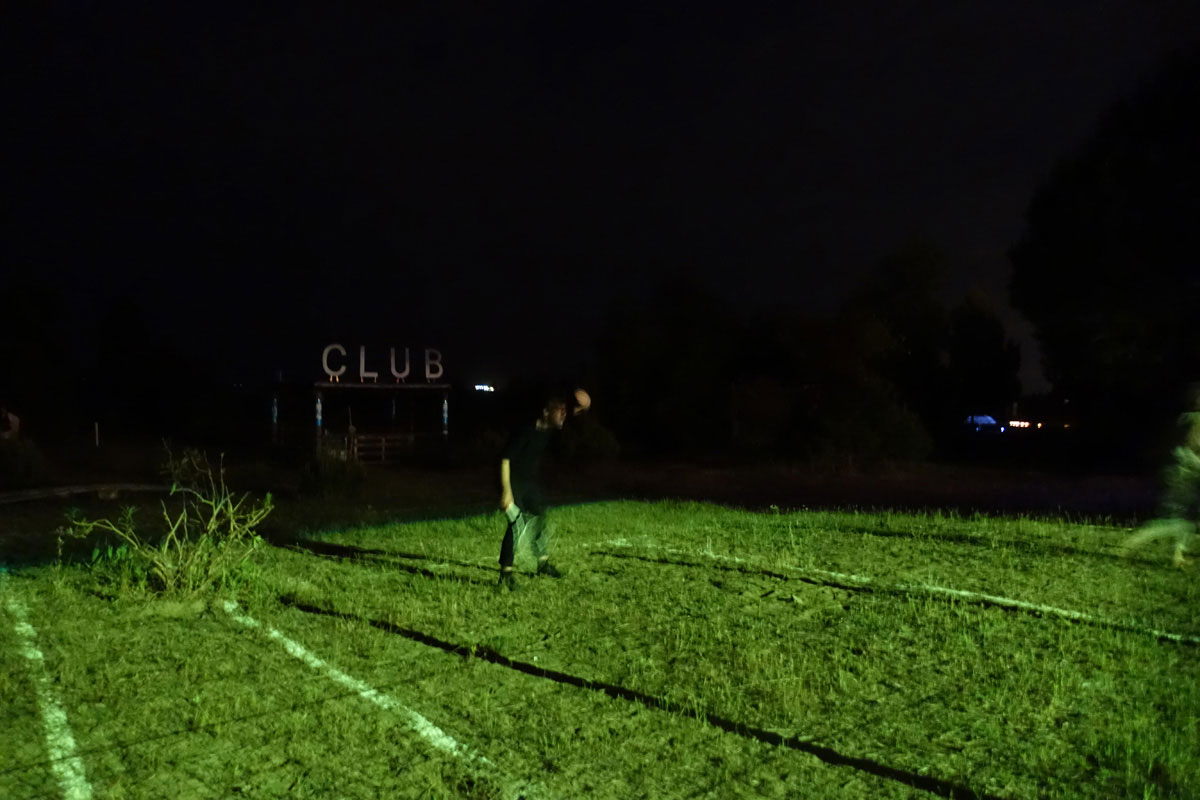
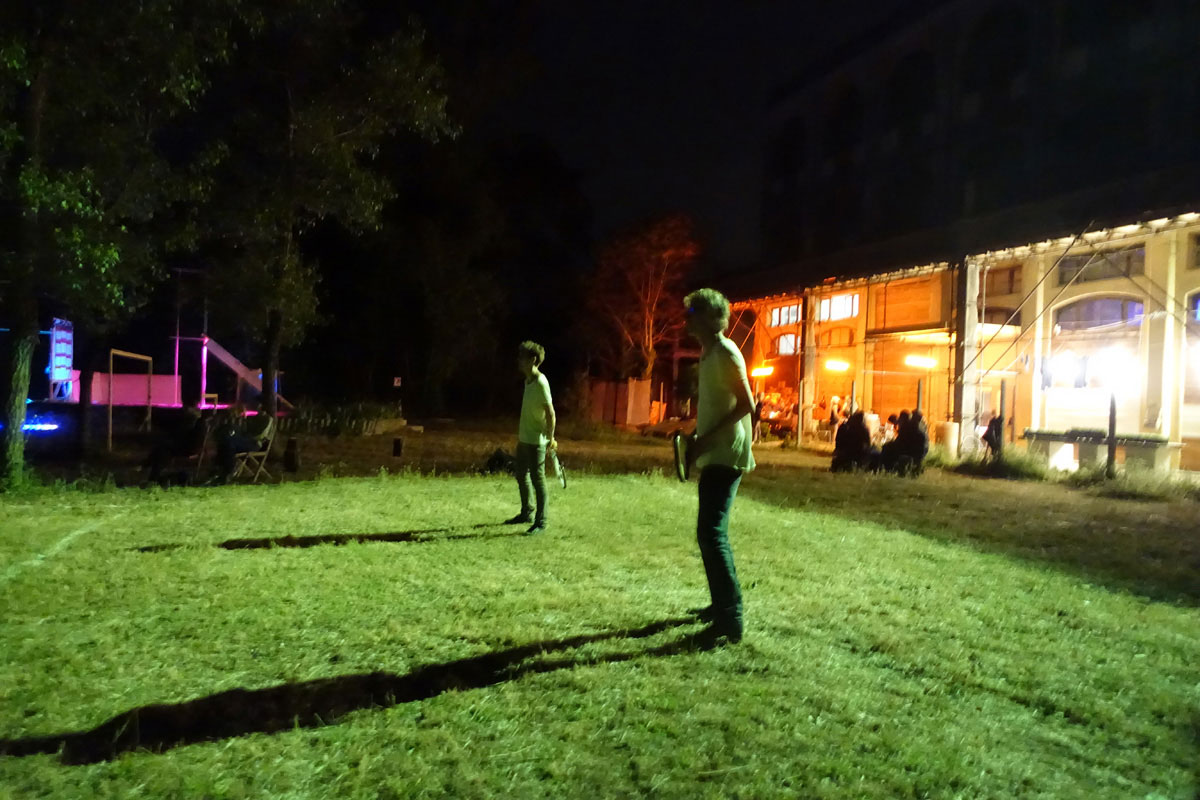
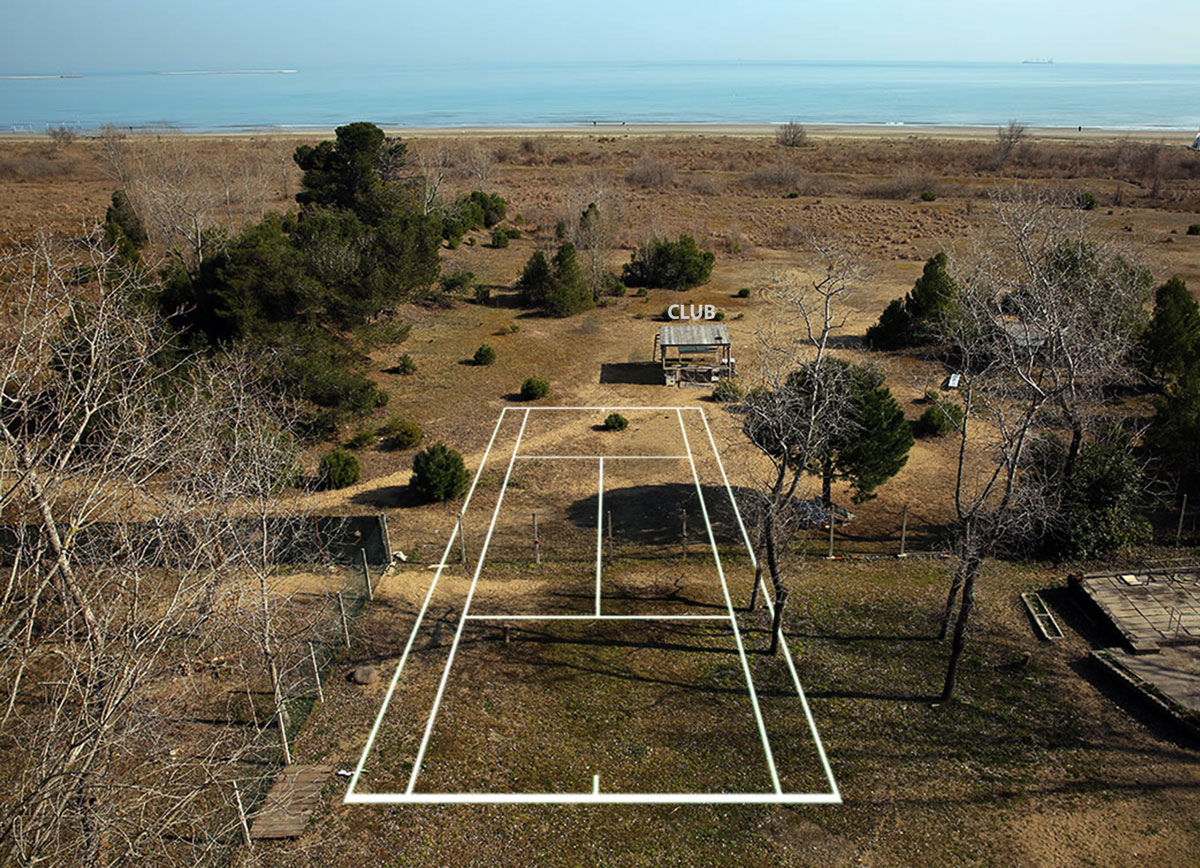
The Tennis Club project conceived for this event consisted in the painted layout in the size and format of of an original tennis court which spanned over the prior existing fence that marks the border of the garden of the former Marinoni hospital. The tennis court had a club house, built outside of the fence in the area where Venice youths go to procure their drugs.
The concept discussed inside and outside, being allowed and rejected while providing the illusion that it was still the same game that was taking place on both sides. The space was clearly divided between a cultivated inside of a former hospital garden and the outside area that was used by migrants as sleeping and gathering place, the inside protected by a fence.
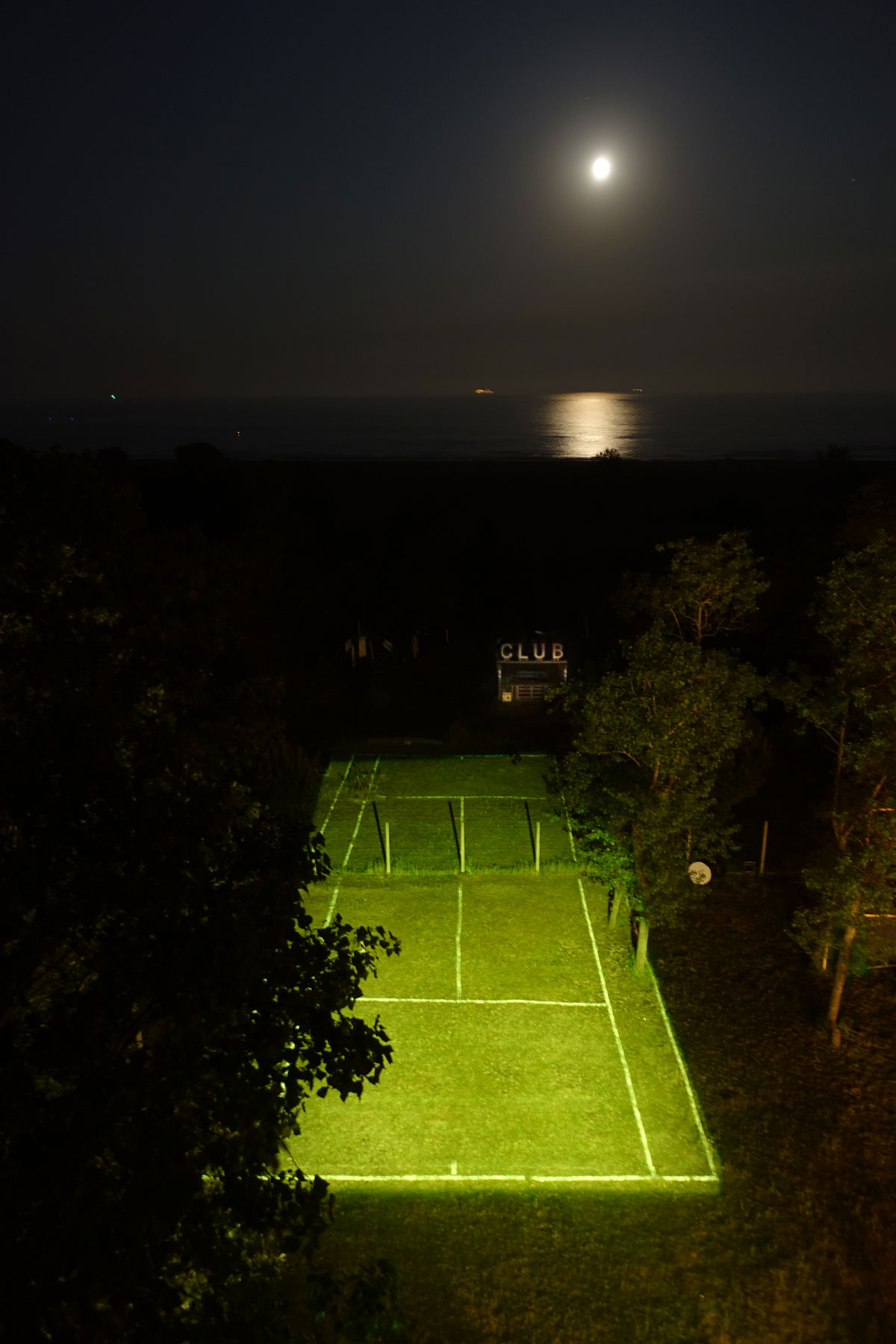
The big letters on top of the house situated in the “outside” area spelled CLUB, indicating the concept of inclusion and exclusion via membership in a club, as was discussed as a sort of self understanding of the European Union in its migration politics.
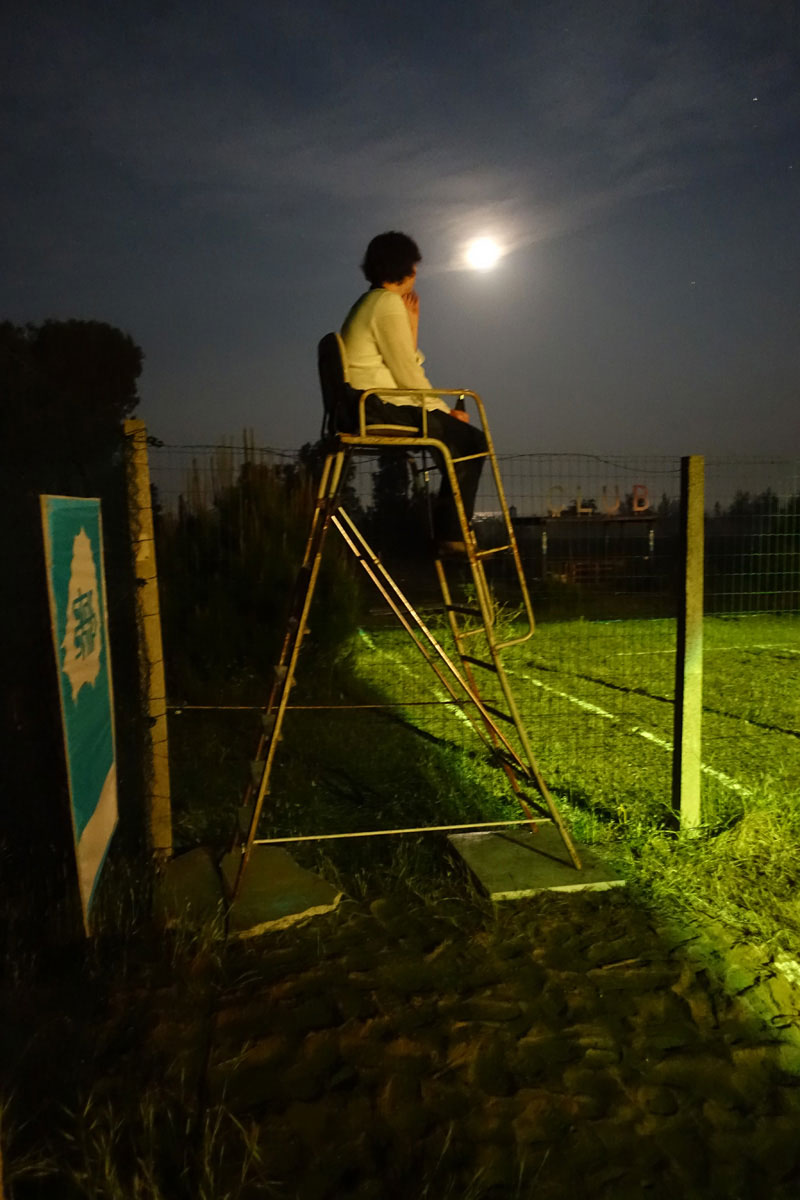
The playing conditions on the outside of the fence were much poorer than inside, and the players were blinded by flood light at night, worsening the uneven conditions between the people outside and inside while pretending to be in a fair contest. The fence, higher than a normal tennis net also had a watchtower in the form of a referee chair.
Rackets, balls and accessoires were generously provided for players by the main sponsoring brand for the Pane per Poveri project.
Technical Details:
Chalk for the Tennis court, building materials, letters in wood panel painted white for the clubhouse. A tennis referee chair, flood light.
Dimensions:
23,77 x 10,97 meter.
Fence 2.5 m, and the club house 3x4x3 Meters, wooden letters 1.2 meters
On the difference between exchange value and use value.
The use value is the potential usability of a thing. It can vary between individuals and depends on the user. Thus, the use value of a cigarette for a smoker and a non smoker is very different.
The exchange value is the equivalent of the price on the market. If the total exchange value of a thing collapses, such as of a city, its land and houses, although it has no value on the market, there nevertheless remains its use value.